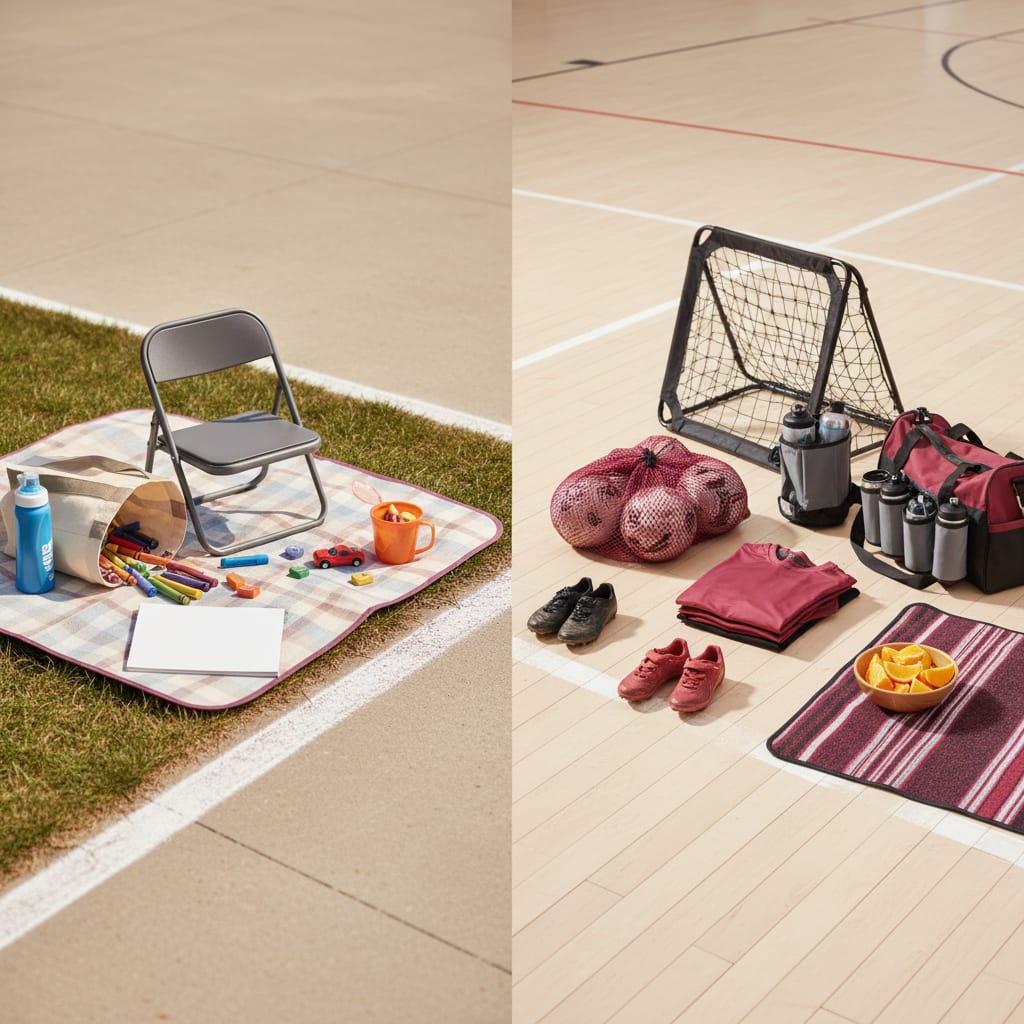
When Your Kid Wants to Quit a Sport: A Decision Guide

When your child wants to quit a sport, the answer is rarely “yes, tonight” or “never” — it’s a diagnosis first. Find out what they’re actually quitting: the sport itself, a rough patch of it, a coach, a teammate, an overloaded week, or a bad car ride that hasn’t healed. For most mid-season cases, the steady call is finish the season, smaller — fewer extras, zero pressure, effort celebrated — then decide together at the natural break. For a kid who’s dreaded it for weeks running, walking away isn’t failure. It’s roster management, and every good career includes some.
First, figure out what “quit” means
“I want to quit” is a headline, not the story. Kids reach for the biggest available sentence when the real one is smaller: I’m tired on Tuesdays. The new coach yells. I got benched Saturday and nobody explained why. Practice moved to the same night as my friend’s thing. Your first job is reporter, not judge, and interrogation kills the source — so ask sideways, at low-stakes moments. In the car (not post-game), at bedtime: “What’s the part of soccer you’d delete? What part would you keep?” The delete/keep question outperforms “why do you want to quit?” every time I’ve run it, because it lets a kid critique the sport without putting their whole self on trial.
Common actual stories, in rough order of frequency from my own bleacher research: tired (schedule problem, not sport problem), friend moved teams, coach mismatch, skill gap making practice feel like public struggling, and — the quiet one — a parent whose sideline enthusiasm has turned the sport into a job. That last one is worth an honest mirror-check before any roster decision; the car-ride rules exist because this pattern is common, not rare.
The case for finishing the season
Mid-season, my default is finish — not as punishment, and not because “Romanos aren’t quitters” (a genre of speech I’ve promised my kids never to give), but for two practical reasons. First, the team is a real commitment kids can understand at kid-scale: eleven people are counting on a left fullback, and being counted on is part of what sports is for. Second, quitting from inside a low moment teaches that low moments are exits, and most low moments — a benching, a lost starting spot, three bad practices — resolve within a few weeks all by themselves.
But “finish the season” only works if you shrink the season to finishable size:
- Strip the extras. Optional clinics, extra scrimmages — gone. The commitment is practices and games, nothing more.
- Zero performance talk. The season’s remaining KPI is showed-up. “Love watching you play” and the orange slices; that’s the whole postgame show.
- Fix the fixable. If the diagnosis surfaced a schedule collision or a coach issue, act on it — that’s a calm conversation with the coach, not a hostage negotiation. Half of “I want to quit” cases dissolve when the underlying logistics do.
- Put the real decision on the calendar. “We finish, then in March we decide together about next season” converts a daily battle into one scheduled meeting. Kids honor a date they can see.
The case for walking away now
Finish-the-season is a guideline, and guidelines lose to evidence. Walk away mid-season without guilt when: the dread is chronic — weeks of genuine misery, not a bad Tuesday; the environment is the problem (a coach who demeans kids, a team culture you wouldn’t accept at school); or the season was somebody else’s dream wearing your kid’s number. And if what your kid is carrying looks bigger than sports — mood changes that follow them home, anxiety that isn’t about Tuesdays — that’s beyond a pep-talk framework and my lane both; the writers at The Stay-at-Home Mom’s Digest sit with the feelings side of parenting far better than a field guide can.
A kid released from a genuinely wrong fit doesn’t learn quitting. They learn that their read on their own life gets taken seriously, which is the exact muscle you want them flexing at fifteen.
After the exit (or the finish): keep the door propped
However it ends, the move that pays off for years is the same: no cooling-off lecture, no “we spent all that money” audit (say that one to the garage, alone, like the rest of us), and no sport-shaped void. Kids who leave one sport often boomerang to another — or back to the same one — within a year or two, if the exit was clean and the ball stayed in the yard. Keep the ten-minute backyard habit alive with zero agenda: it preserves the skills, the fitness, and the identity of kid who plays, detached from any roster. And when they float the next sport, resist the flinch. A kid cycling through sports isn’t flaky — they’re scouting, and the scouting phase is supposed to look like this.
FAQ: when kids want to quit sports
Should I let my child quit a sport mid-season?
Default to finishing — shrunk to just practices and games, with zero performance pressure — unless the misery is chronic, the environment is bad, or the sport was never their choice. A scheduled end-of-season decision beats a nightly debate in every household I know of, including mine.
What should I say when my kid says they want to quit?
“Tell me the part you’d delete and the part you’d keep.” Then listen like a reporter. Avoid the perseverance speech in the first conversation — the fastest way to lose the real story is to make the headline expensive.
Is quitting a sport bad for kids?
Quitting a wrong-fit sport, cleanly, after honest diagnosis — no. Kids sample and prune; that’s the design. What costs them is the pattern where every hard patch triggers an exit, which is why the diagnosis step matters more than the verdict.
My kid quit and now regrets it. Do I say anything?
Not the sentence you’re thinking of. “Sounds like you miss it — want to look at spring sign-ups?” is the whole play. The regret is doing the teaching; your job is just to keep the door cheap to walk back through.