The 10-Minute Backyard Practice Habit That Sticks
Practicing soccer at home sticks when it’s built like a habit, not a commitment: ten minutes, anchored to a cue that already happens every day (right after snack, right before dinner), framed as a game the kid would choose, and ended while they still want more. That’s the whole formula. Families don’t fail at backyard practice because the kid lacks discipline — no seven-year-old has discipline; that’s not the species — they fail because they built a 45-minute program that required motivation. Motivation is weather. The ten-minute habit is climate.
Why ten minutes beats an hour (it’s not a compromise)
The math looks wrong and plays right: ten minutes daily is over an hour of touches a week, delivered in the highest-quality slices — a kid’s genuine full attention, which is a ten-ish-minute resource no matter what the travel-team brochure implies. The Saturday hour, by contrast, is ten good minutes wearing a fifty-minute coat, and it costs so much motivational fuel that it happens three times and dies. Daily-short also compounds where weekly-long can’t: touches-per-week is the stat that quietly builds the kid who looks “natural” on the ball by next season. Naturals are manufactured in driveways. I’ve watched the factory run.
The anchor: attach it to something that already happens
The single load-bearing decision is when, and the answer is never a clock time — it’s a cue. “4:30pm” requires someone to be watching a clock and feeling like it; “right after snack, before any screen goes on” runs itself, because the snack was happening anyway. Good anchors from families that have made this stick: after snack, while dinner’s cooking (the chef doubles as rebounder through the window), right after homework as the brain-break, or first thing Saturday before the day gets opinions. Pick one, run it two weeks before evaluating, and let it skip guilt-free on practice nights when the evening’s already spoken for — a habit that survives exceptions is a habit; one that demands perfection is a diet.
The loop: cue, game, small win, done
Habit mechanics for people under four feet tall:
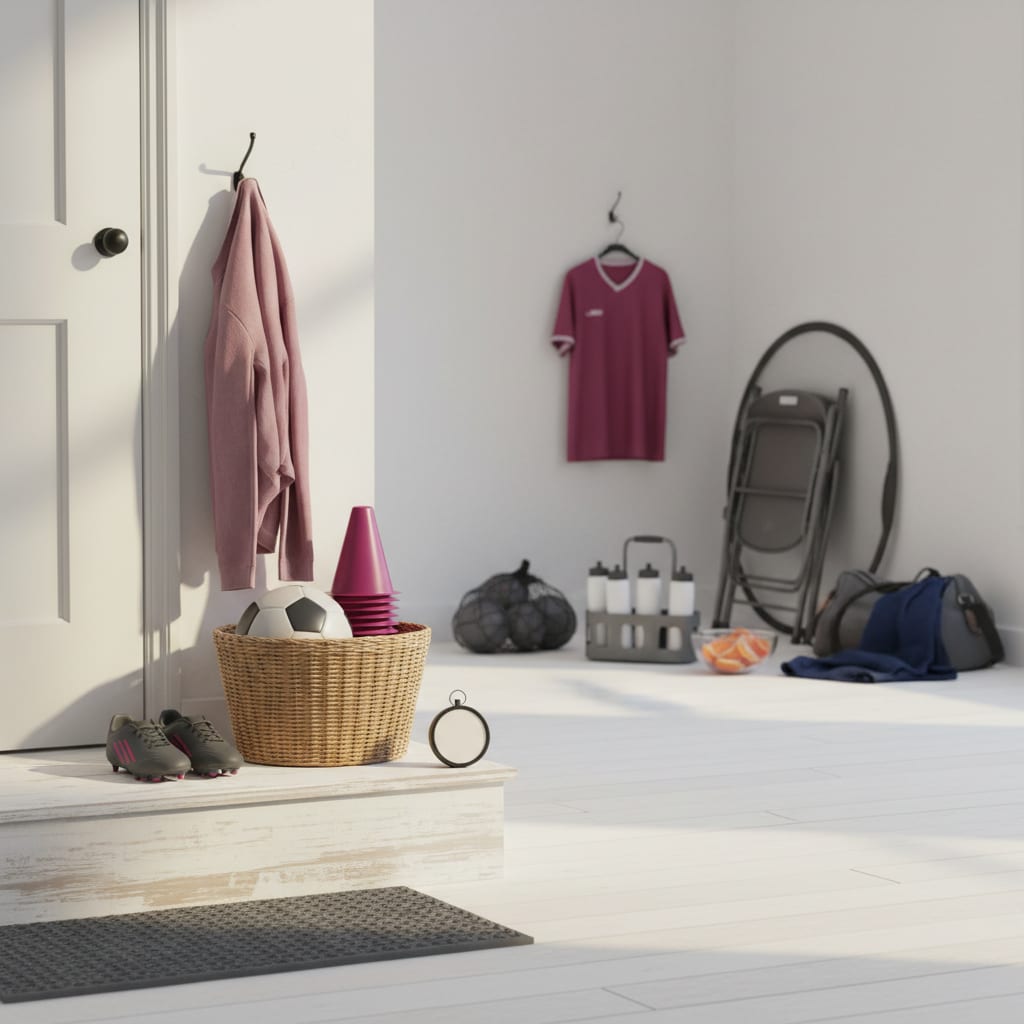
- Cue fires (snack ends). The gear is already staged — ball and cones live by the door, because a habit that starts with “find the ball” starts with a search party and often ends there.
- The kid picks the game. Two or three options, their call: slalom time-trial, touch-wall record, finishing rounds. Choosing is half of wanting. Your drill card is the backyard drills post; their menu is whichever three they like.
- Chase one number. Beat yesterday’s record, not “improve.” A count they own is the entire scoreboard — no technique review, no sibling comparison leaderboards.
- End early, on purpose. Ten minutes, or two minutes after the first “watch THIS!” — whichever comes first. Ending at the peak is what sells tomorrow’s session. Ending at the whine sells nothing, and refunds yesterday.
Your role: rebounder, commentator, absolutely not coach
The habit’s most common cause of death is a well-meaning adult upgrading it into training. The moment backyard time develops objectives, corrections, and a curriculum, it becomes a second practice — and your kid already has a coach for that, plus a fence-line rule protecting them from a second one. Your entire job description: feed balls, run the stopwatch, announce records in a sports-radio voice, lose one-v-ones with theatrical dignity. One technique cue per week, maximum, smuggled in as a game variant. If they ask “was that good?” the answer is what you saw, not what to fix: “you took it with your left without even thinking — did you notice?”
When it stalls (it will) and what actually restarts it
Every habit flatlines around week three. The restart menu, in order of cheapness: rotate the games (same loop, new menu — staleness reads as “I hate practice” but is usually just menu fatigue); change the venue (park instead of driveway; same drills, feels new); add an audience (grandparent on the porch converts a stale Tuesday into a gala); or let it hibernate a week, no speeches, gear left visibly by the door. What never restarts it: making it mandatory. The habit’s power source is that it’s the kid’s thing — annex it and you’re not restarting a habit, you’re opening the quitting conversation a season early. And if they’d rather do the whole thing with a basketball or a glove some month? Same loop, different ball. The habit is the asset; the sport is the costume.
FAQ: the daily practice habit
How do I get my kid to practice without nagging?
Remove the need for the ask: fixed cue, staged gear, kid-picked game, one record to chase. Nagging is what fills the gap when a system’s missing — build the system and the gap closes. Mostly.
What if we miss a bunch of days?
Nothing — restart at the next cue, zero commentary. Habits die from “we ruined the streak so why bother,” not from missed days. There is no streak; there’s just “after snack, we play.” Wednesday doesn’t remember Tuesday, which at this age is a feature across the board.
Should the habit run year-round or just in season?
Let it run whenever it wants to. Off-season backyard time with no team attached is where the sport quietly becomes the kid’s own — many kids are more into it between seasons, when nobody’s evaluating. Skip it entirely some months; the door matters more than the attendance record.
Is ten minutes really enough to see improvement?
Over a season, visibly — touch, confidence, and wanting-the-ball are volume products, and daily-short wins the volume war against weekly-long without breaking a sweat. Add the Tuesday practice on top and you’ve got the whole development stack a rec-age kid needs.