Volleyball Gifts for Players: What Gets Used, by Age
Volleyball gifts sorted by age and ball: oversized light balls under 8, official-size light balls for 8 to 12, a backyard net, solo trainers, stocking stuffers.
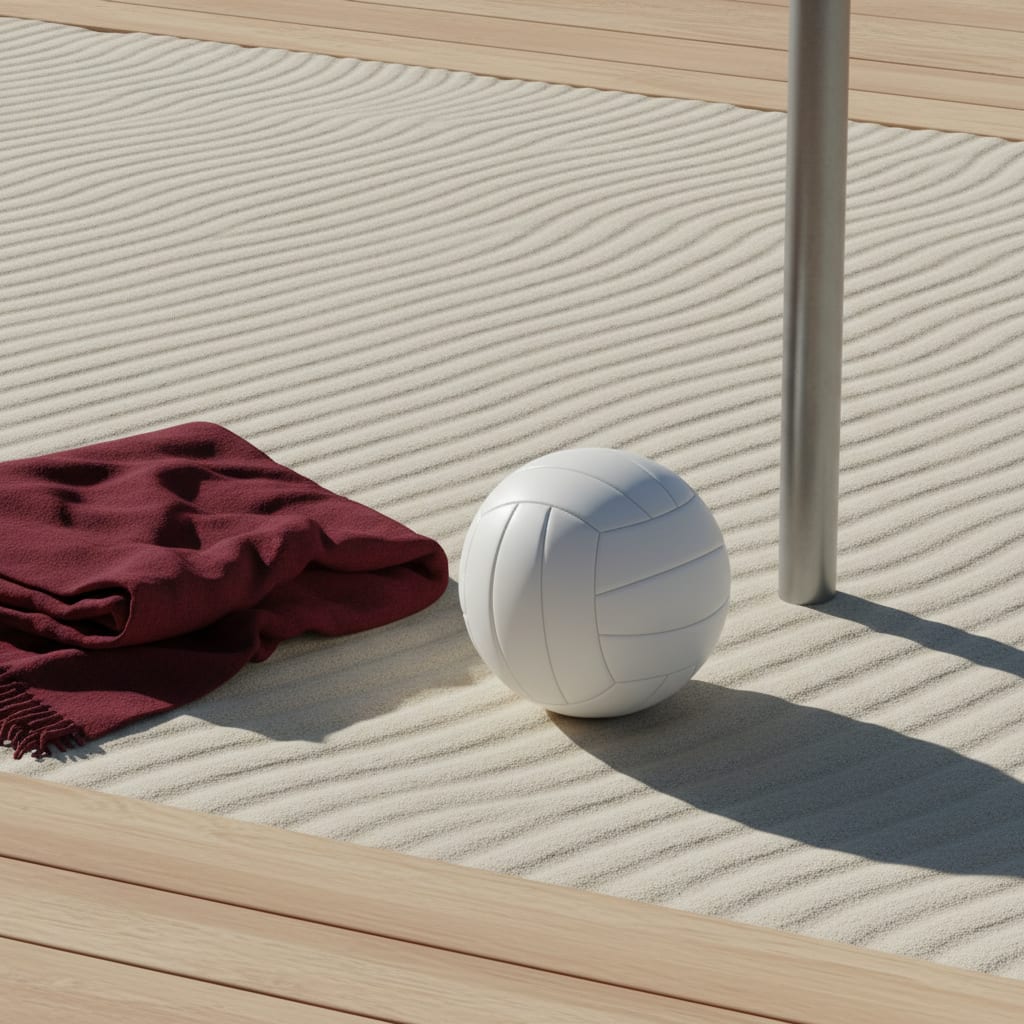
The volleyball gifts that get used are a ball your kid can actually play with at their age, and somewhere to play. Ball first: Baden’s volleyball size chart puts kids 8 and under on an oversized, lightweight ball, 8 to 12 on an official-size lightweight ball, and 13 and up on official size and weight. Then the place to play: USA Volleyball’s own gift advice says the best way to get kids playing is to “install a net in your backyard and let the kids come over and play,” and if there’s no backyard, “get a portable net and take it to the park.” After that, a solo trainer and a few stocking stuffers round it out.
Nothing here is ranked and nothing gets stars. It’s sorted by age and by what’s still in use when the next season starts.
The rule before you buy: which ball does your kid play with?
Volleyballs look alike in a store and they are not alike in a nine-year-old’s forearms. The three bands on Baden’s chart (published 2018, read 2026-11-27) are the clearest version we found:
| Age | Ball |
|---|---|
| 8 and under | Oversized and lightweight |
| 8 to 12 | Official size, lightweight |
| 13 and up | Official size and official weight |
The middle band is where most gift-buying goes wrong. A 10-year-old playing rec or club is usually using a lighter ball at practice than the one on TV, and a full-weight indoor ball under the tree is a ball they’ll grow into later rather than play with now. If your kid is on a team, ask the coach or check the league’s equipment note before you buy. It takes one text.
Also check indoor or outdoor. Indoor balls are made for the gym floor; beach and backyard balls are built for grass, sand and weather. A kid who mostly plays in the backyard in summer and in a gym in winter can use one of each.
Under 8: an oversized light ball and space to play
The first ball should be big, light and forgiving. A ball like the Baden Softlight youth oversized training volleyball, which Baden sells as 20% larger and lighter than standard for K-5 players, is the shape of what Baden’s chart describes for this age. It’s soft enough for a living room and big enough to actually hit.
At this age the gift is really the playing. A balloon over a strung-up rope works too. USA Volleyball’s John Kessel calls it “the Gift of Play,” and the point he makes is about spontaneous play with no coaching: kids lobbing a ball over a net in a yard, with nobody running a drill.
Ages 8 to 12: the lightweight official-size ball
This is the ball that gets used at a youth practice. Two examples that sell as youth lightweight balls:
- The Molten VBU12 light volleyball, Molten’s under-12 lightweight ball.
- The Tachikara Volley-Lite, sold as a lightweight youth training ball.
One good ball at home means passing against a wall, setting to themselves in the driveway and a lot fewer “can I borrow yours” moments at practice. If you’re buying for a kid on a team, match the brand the team uses when you can; a ball that feels the same at home and in the gym is the one that gets picked up.
Ages 13 and up: the official ball, and the trainer
From about 13, Baden’s chart moves players to official size and weight. A durable indoor ball like the Mikasa VQ2000 is a gift that works for wall reps, open gyms and the backyard. Teen players on club teams often have strong opinions about ball brand, so ask, or put a gift receipt in the box.
The gift teenagers tend to use most is the one that lets them practice alone. A solo trainer, like the VbStar serve and spike trainer, is built for serving and hitting reps with no partner and no chasing the ball. It’s the volleyball version of the softball rebounder: it removes the “I need a partner” excuse.
The backyard net: the gift USA Volleyball actually names
Kessel’s piece on the best gifts for a volleyball player is worth reading in full, and the only object it recommends is a net. His reasoning is about how kids learn the game: playing small-sided games teaches it faster, and “playing doubles teaches you the game faster than the six-person game.”
A freestanding portable net set like the Bearwill 12-foot portable volleyball net, height adjustable and with a carry bag, is the kind of thing that fits that advice: up in the yard on a Saturday, folded into the car for the park on Sunday. Before you buy, measure the space you actually have and check how the net anchors on your ground. A net that takes half an hour to put up will stay in its bag.
From the sideline: the backyard net is the gift that gets the neighbor kids over, which is the whole point Kessel is making. It’s also the one that gets a parent dragged into doubles. Accept this.
Volleyball gifts for girls (and boys, and anyone on the team)
A lot of volleyball gift searches are for girls. The gifts above don’t change. Sort by age and ball, not by color. Kessel’s article makes the same point from the court: “When you are an athlete, there is no gender specificity to that term.”
What does change by age is how much a kid cares about which ball and which brand. Under 12, any good lightweight ball in the right size will do. Teen club players are pickier, so ask them or their coach.
Kneepads, shoes and anything that has to fit
Kneepads and court shoes are fit purchases, not surprise gifts. Kneepads in particular are protective gear, and getting the fit right is a job for your kid, a try-on and their club’s equipment guidance, not for a wrapped box. If you want to give one of these, give a gift card to the store your club uses and go together. The same logic applies to the glove and the bat in our softball gifts guide.
Stocking stuffers that get used
- A ball pump. Every volleyball goes soft eventually. A Wilson dual-action ball pump works for every ball in the house.
- Socks. Most gift guides mention them because practice burns through them. Ask for their size.
- A water bottle with their name on it. The team bench is a sea of identical bottles.
- Hair ties and a small pouch for players with long hair.
Gifts that aren’t things
Kessel’s list of four gifts is three non-things: struggle, a lifetime sport and unconditional support. The one parents can wrap is time:
- Open-gym fees or a clinic. A few sessions of extra play over the winter break.
- Tickets to a college match. Watching good players read the game is free coaching.
- Your own time at the net. Kessel points out that Misty May-Treanor and Karch Kiraly both grew up playing with a parent. You don’t need to be good. You need to show up in the yard.
If you’re buying for a kid who plays more than one sport, our basketball gifts and soccer gifts guides follow the same rule: the right size, and a way to practice alone.
When to buy
For a December gift, buy the ball and the net early enough to check sizes and swap if you need to. A net that arrives Christmas Eve gets assembled in the dark. If your kid’s club season starts after the holidays, a gift card plus a shopping trip for anything that has to fit is a perfectly good present.
FAQ: volleyball gifts
What size volleyball should a 10-year-old use?
Baden’s chart puts ages 8 to 12 on an official-size lightweight ball. Ask your kid’s coach which one the team uses.
What are good volleyball gifts for a beginner?
A ball in the right size for their age and somewhere to play: a backyard or park net. A solo trainer helps older beginners practice alone.
Are volleyball kneepads a good gift?
They’re protective gear that has to fit, so it’s better to give a gift card and buy them together with a try-on.
What does USA Volleyball say is the best gift?
Its gift article names play, struggle, a lifetime sport and support, and recommends putting up a backyard or portable net.
What volleyball gifts are good for teenagers?
An official-size ball they like, a solo serve trainer, open-gym or clinic time, and match tickets.