Sleeping in a Cast: What the First Nights Actually Take
A child comes home in a new cast and the first thing that breaks is not the season — it is the nights. Expect two or three rough ones, a bedtime that has to move downstairs or sideways, a 2am bathroom trip that now needs a second person, and a kid who cannot get comfortable in the position they have slept in since they were four. Nothing below touches the cast or the limb inside it; that belongs to the clinic that fitted it.
Unambiguously, because on a sports site a cast usually arrives by way of a field: I have nothing useful to say about injuries, healing, pain, itching or when anybody plays again. I coach eight-year-olds in a rec league. What follows is the household half — rooms, hours, logistics — which is the half nobody briefs you on.
Ask the clinic the night questions before you leave
Discharge happens in a corridor at the end of a long day and is almost entirely about the daytime. The questions you want at 2am are the ones nobody thinks to ask at 4pm. Ask them while there is still somebody to ask:
- Who do we call overnight, on what number? The after-hours one, written down.
- What would make you want to see him tonight rather than in the morning? Their threshold, in their words.
- Is there anything we must not do overnight? Ask plainly, let them answer plainly.
- He is going to want to scratch — what do we do? Say it out loud. The most predictable 1am problem with a new cast, and the internet has a dozen confident answers, several of which the clinic will tell you not to do.
- What does the morning look like? Washing, dressing, getting out the door.
Photograph the answers in the parking lot; you will not remember them by ten.
What actually changes at bedtime
Almost none of it is the cast. It is the building.
The stairs become a two-person job at the worst hour. A kid who has run their own bedtime for years now needs somebody at the bottom and somebody at the top, at precisely the hour one adult is doing dishes and the other is on a call. Settle it before dinner, not at 7:40.
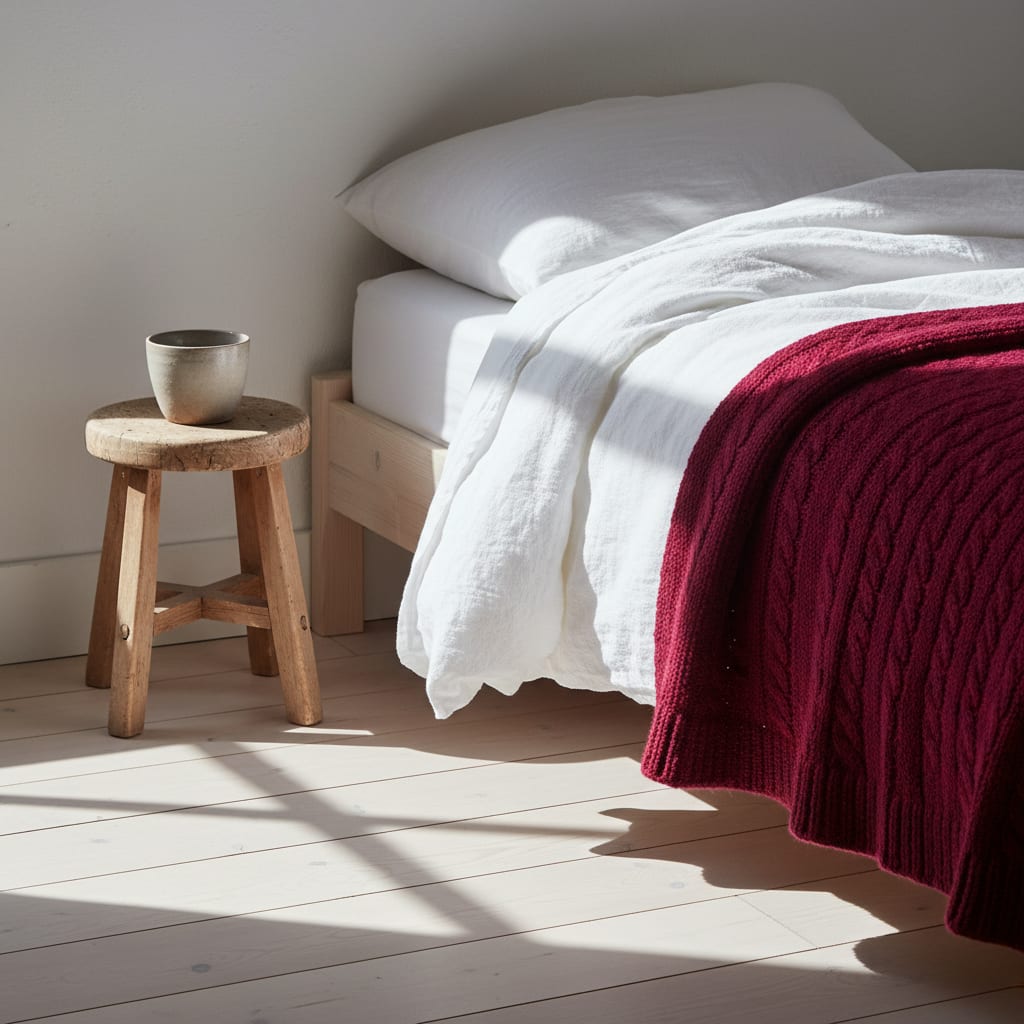
The room may have to move. Plenty of families put a mattress in the living room for a week, and that is not a failure of nerve — it removes a flight of stairs from every night trip. If the room moves, move the routine with it unchanged: same order, same lights-out, same words. Location can change or sequence can change; both at once buys you a fortnight of bad nights instead of three.
The 2am trip now involves you. The change parents are least ready for, and the one that costs you sleep. Leave a light on between bed and bathroom before you turn in, not after the first call.
The sibling sharing that room is awake too. If it produces two tired kids instead of one, split them for a week.
The bed runs warmer. Every parent I know with a kid in a cast says so. Why is a claim about bodies and not mine to make from a folding chair — but room temperature is a dial you control, and nobody reaches for it on night one. Betteroo’s note on how warm a sleeping room should be is written for babies; a number is a number. Anything about heat under the cast is a clinic question.
Everything takes longer. Pushing bedtime later to absorb the extra fifteen minutes is the obvious move and the wrong one. Start fifteen minutes earlier instead.
The first few nights, roughly
Describing, not predicting. What families report: night one is the worst and the shortest, night two often lands harder because the adrenaline has gone and the novelty with it, and by the third or fourth most have something recognisable again. Not the old bedtime — a shape.
If it is not heading that way by the end of the first week, that is a phone call rather than a technique. The rule this site applies to sleep disruption after a fright holds with more force here: a disruption that keeps growing is information for a clinician, not a problem to fix with a routine.

House policy, plainly: a sleep plan knows nothing about casts and will not help the kid in one. It is for the layer underneath — the toddler whose bedtime quietly absorbed the disruption while everyone was at the fracture clinic. For the general version of an unsettled small-child night, Betteroo’s rundown on nights when a little one is out of sorts is a reasonable start. Around $20 a month; a tool, not magic.
The season, and the Saturday that is now empty
Here is the part that belongs on this site specifically.
The season ends mid-sentence. No last game, no last whistle, no bench-clearing hug. One Tuesday there is practice and one Wednesday there is a cast, and a nine-year-old feels that ending far more sharply than the adults do. If your kid is quiet about it, that is not resilience — it is processing on their own schedule, usually at bedtime, which is the other reason these nights run long.
Go and watch anyway, once, and ask first. Some kids want the folding chair on the sideline with the team; some would rather be anywhere else. It is not obvious from outside, and it is not permanent: ask before each game.
Tell the coach once, in one message. What happened, roughly how long, and that you will send news when there is news. Then stop updating the group chat — your kid does not need to be a running item.
When they play again is the doctor’s sentence to say. Not the coach’s, not the league’s, not yours, and very much not mine. “Ask at the next appointment” is a complete answer to anyone who wants one.
The disappointment half goes deeper than a sports blog should take it. Leah covers that ground at The Stay at Home Mom’s Digest, including the sleep debt a parent racks up while everyone worries about the kid.
What to leave alone
- Don’t rebuild the routine. Move it, shorten it, start it earlier — but keep the order. A new routine in a strange week is two changes, not one.
- Don’t renegotiate lights-out nightly. The clock is the one fixed object left in the day — the same clock practice tries to eat.
- Don’t move the other kids’ bedtimes to match. The house does not need to be up late because one member is.
- Don’t promise a return date. Not even a vague one; you will be asked nightly.
- Don’t run week two like week one. The commonest thing I see is a family still running the emergency evening long after the kid adjusted. Try a normal one.
If this reads familiar it should: it is the shape of the fortnight after a kid gets glasses — a new physical fact arrives, the nights absorb it first, and the fix is in the room, not the kid.
FAQ: nights with a child in a cast
How long until my child sleeps normally in a cast?
I can’t answer that, and anyone with a confident number has not met your kid. Families commonly describe the first two nights as the hard ones, with something recognisable by the end of the week. Getting worse rather than better is a call to the clinic.
What do I do about the itching at night?
Ask the clinic, before you leave the building. There is a lot of confident advice online and some of it is the exact thing the people who fitted the cast will tell you never to do. It is the clearest example here of a question that looks practical and is actually medical.
Can they sleep in our bed for a few nights?
A household call, and I am not going to moralise. Decide it out loud as temporary, with a named end — the hard part is rarely the week in a cast, it is the fortnight after it comes off.
When can my kid play again?
Only the doctor treating the injury, at the appointment, with the imaging in front of them. Nobody at the field gets a vote — not me, not the coach, not the very sure parent two chairs down.