New Glasses for Kids: What Changes at Bedtime
Here is the short version, because you are probably reading this on the first night. The glasses come off before your kid gets into bed, not once they are lying down. They live in one named spot reachable without standing up. And for a week or two, expect extra night waking and a slower morning — not because the glasses are wrong, but because a kid who wakes now wakes into a blur they did not have last Tuesday. It settles, and the routine keeps the extra step forever.
Everything about the prescription itself — how the lenses feel, headaches, how long adjustment takes, whether the fit is right — belongs to the eye doctor who wrote it, and I am not guessing at it from a blog. What follows is the logistics half: the nightstand, the 6:40am scramble on a Saturday.
Where the glasses go at night
Pick the spot before bedtime one, say it out loud, and never move it. That is the whole trick, and it works for the same reason a bag-packing routine works: the object has an address, so nobody has to remember anything. Two rules for that address.
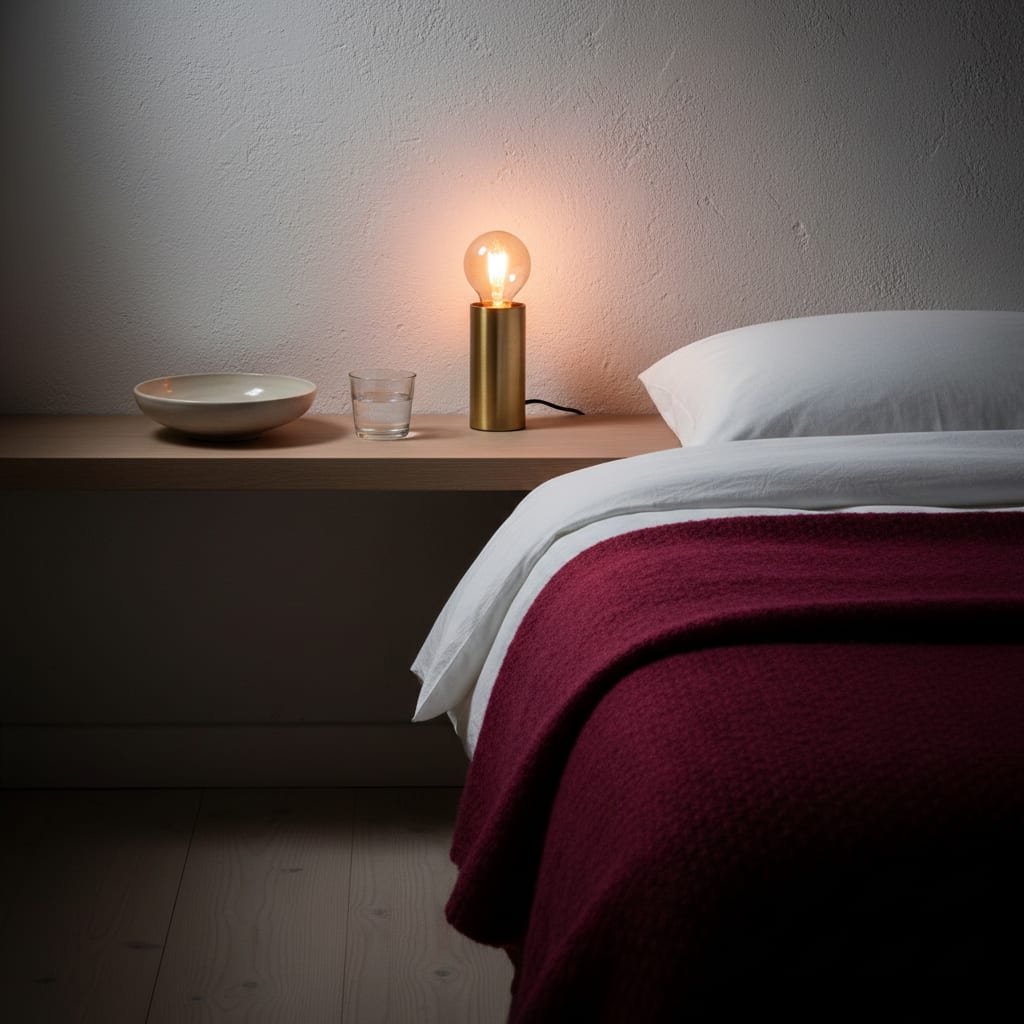
- It has to be reachable from the bed without feet on the floor. A kid who has to get up and hunt in the dark is a kid who is properly awake, and now you have a bedtime problem on top of a glasses problem. A low shelf, the corner of a nightstand, a wide shallow bowl — arm’s length, not across the room.
- It cannot be the bed. Not the mattress, not under a pillow, not “just for a second while I get in.” I hold this opinion expensively, as does every parent who has heard the sound.
A shallow dish beats a case at home. Cases need two hands and a lid opened in the dark, which is one obstacle too many at 5:50am. Save the hard case for the sports bag and the hotel; let the home spot be an open bowl you already own.
The 2am problem nobody warns you about
A child who wakes at night in a house they know has always been able to sit up and see the outline of the door. That is a lot of quiet reassurance, and you never noticed it because it was free. Take it away and some kids get a rough fortnight — and what they will do about it is come and find you, because you are the only navigation system left.
- Give them a light they can turn on by touch, sited where a hand lands, not where an adult would put a lamp — findable with a knuckle at the third attempt, half asleep.
- Do not hand them the glasses at 2am. That is a full wake-up: focus, adjust, review the situation. If they ask because they want to see the room, put a hand on them instead and say the room is exactly the same.
- Keep the light low and say what the morning will be. Your glasses are in the bowl. They’ll be there when it’s light. You are not solving anything; you are removing the question. Same doctrine as any other night that has come apart after a change — we walked through that arc in sleep after a scare.
One useful piece of kit here, and not the one people expect. A colour-changing time-to-rise light — the Hatch Rest, now sold as the Hatch Baby sound machine, is the one most families end up with — communicates in a soft blob of colour rather than numerals. A blurry green is still green. A blurry 6:14 is nothing at all. If you were relying on a clock read across the room to keep a kid in bed until a civilised hour, the glasses just broke it. Betteroo’s rundown of how those clocks get used is fair about what they do and don’t do.
The first mornings are the strange part
Nobody tells you this bit. For the first week the morning does not start with your kid’s eyes; it starts with their hand. There is a reach, a pause, and a small administrative moment before they are a person — funny to watch once, slightly poignant the fourth time.
- The morning gains about ninety seconds, and you will lose them somewhere else. Build them in rather than discovering them at the door.
- Train the reach onto something that already happens. Glasses on before feet hit the floor, or before the bedroom door opens — pick one and make it the same one every day. Habits attach to other habits; they do not attach to intentions.
- Expect them forgotten at least once in the first fortnight, usually on the morning it matters most. That is the ordinary rate, not a character flaw — treat it as one and you get a kid who hides a broken pair.
If your house has already survived a change that rearranged the mornings, you know the curve: a disaster on day three, uneventful by day twelve. We mapped it for the fortnight after preschool starts, and the mechanism is identical — the days did the changing, and the nights are just where it shows up.
Game-day mornings and the away weekend
Now the sports half, which is where this stops being a general parenting post.
Two pairs is a scheduling problem, not a shopping one. Whether a sports pair is required, and what kind, is a question for the coach and the optician — not for me. What I can tell you is that the moment there are two, the failure mode is not losing a pair. It is having both of them at home.
Build the swap into the bag, not the morning. Everyday pair on the face, sport pair in a hard case that lives in the kit bag permanently and does not come out at the end of the season. Nobody makes a decision at 7am.
Away weekends need the spot recreated. A hotel room has no named glasses address, which is why the first tournament in glasses is where a pair gets stepped on. Take the bowl — literally, an actual dish from your kitchen — and put it on the nightstand before anybody unpacks anything else. Our tournament weekend sleep plan runs on the same idea: the routine travels as objects, not as good intentions.
And warn the coach once, quietly. Not a production — just so a kid who has taken them off is not the only person who knows where they went.

Fair warning: a sleep plan tells you nothing about glasses. What it is good for is the part underneath — whether the bedtime you are running suits the age, so a fortnight of extra waking lands on a rested kid instead of an already-short night.
FAQ: new glasses, nights and mornings
Should my child wear their glasses in bed?
No — take them off before getting in, as part of the routine, not once they are already lying down. A pair worn to sleep gets bent, and a pair removed half-asleep ends up somewhere nobody can find at 6am. Whatever the eye doctor has specifically told you to do beats a routine every time.
Why is my child waking at night since getting glasses?
Most likely because waking now means waking into a blur, and the outline of the door used to be free reassurance. It usually runs about a fortnight and responds to a low light they can reach and a spot they can find. If the waking comes with pain, headaches or anything else physical, that is a call to the eye doctor rather than a bedtime adjustment.
Where should kids keep their glasses overnight?
One named spot, within arm’s reach of the bed, that they choose and you never move. A wide shallow dish works better at home than a case, because a case needs two hands and a lid. Keep the hard case for the sports bag and for travel.
How do I stop my kid getting out of bed to find me at night?
Make the answer available without you: a reachable light, a colour signal they can read blurry, and a sentence at bedtime that pre-answers the 2am question. Then be boring when they come anyway. The novelty wears off faster than the habit forms, which is the one bit of luck in the whole business.