Sleep After a Scare: Nightmares, Falls, and Loud Nights
Most frights cost a family two or three ragged nights, not a season. The move that shortens them is boring: name what actually happened, keep the routine exactly as it was, and add one small comfort you’re willing to keep offering all week. What lengthens them is the opposite — a new bedtime, a new sleeping arrangement, a long conversation about the scary thing at 9pm. A sideline is a loud, fast, occasionally alarming place, so sports families meet this more than most.
Three frights that look the same at 2am
They arrive identically — a kid upright and crying in the dark — and they are not the same event.
A bad dream. The child wakes properly, knows you, and either wants to tell you about it or wants you to stay. There’s a story attached, even a thin one.
Something that happens while they’re still asleep. The child sits up, thrashes, shouts, looks straight through you, doesn’t settle for being comforted, and remembers nothing in the morning. Betteroo’s rundown of what a night terror looks like from the doorway draws the line clearly — and it matters, because the two want opposite responses from you.
A jolt from the room itself. Thunder, a smoke alarm, fireworks on a Friday night. Nothing internal — the room was loud, and the kid woke.
The first wants comfort. The second mostly wants you nearby and silent. The third wants the noise gone and the routine resumed. Guessing wrong turns one night into five: a child comforted at length through something they slept through learns that 2am is where interesting things happen.
Whether the under-two crowd experiences any of this the way an older kid does is genuinely unsettled; the honest version is Betteroo’s piece on bad dreams in babies, and my own take sits in do babies dream, and what that explains about night waking.
The one that happened at the field
Sidelines produce their own catalogue. A ball hits the fence a foot from a toddler’s head. An airhorn goes off behind the bleachers. A parent shouts at a referee and it lands as an adult being furious in public. A player on the next pitch goes down and stays down, and an ambulance comes.
Two things are worth knowing about field frights specifically.
The kid who was scared is often not the kid who was playing. The player was busy. The two-year-old in the wagon had a clear view and no job to do. A sideline sibling waking at 1am after a Saturday isn’t a coincidence, and isn’t a reason to stop bringing them — it’s a reason to move where the wagon sits. The rest of that system is the sideline bag plan for the kid in tow.
Anything involving an actual injury is not a sleep question. If a child hit their head, took a ball to the face, or fell from the bleachers, that’s a call to your pediatrician or urgent care — today, not after reading a blog about bedtime. I don’t write injury guidance. Everything below assumes a fright with no injury attached, and if you’re unsure which you have, you have the other one.
What to do the same night
Short version: less than you want to.
- Go in fast, leave soon. Speed isn’t the enemy; length is.
- Keep it dull. Low light, low voice. “You’re safe, I’m here, it’s still sleep time” is a full script.
- Don’t relocate anybody. Moving a child into your bed is the most expensive decision on offer at 2am — you’ll renegotiate it for a fortnight. If you can’t face the alternative, a mattress on their floor for one night undoes more easily.
- If they slept through it, don’t wake them. For the shouting-but-asleep version, staying near and quiet is the whole job.
- Don’t relitigate it in the dark. “We’ll talk in the morning” isn’t a dodge; talking at 2am makes 2am a conversation slot.
- Fix the room if the room caused it. Storms and street noise are solvable with sound cover — a fifteen-second fix, not a strategy.
Days two and three, where families lose it
The second night is where a two-night problem becomes a two-week one, almost always through kindness.
Keep the routine identical — same order, same length, same time. A season disrupts enough without an emergency bedtime overhaul on top; that’s the same case for structure over strategy made in protecting an early bedtime through late practice nights.
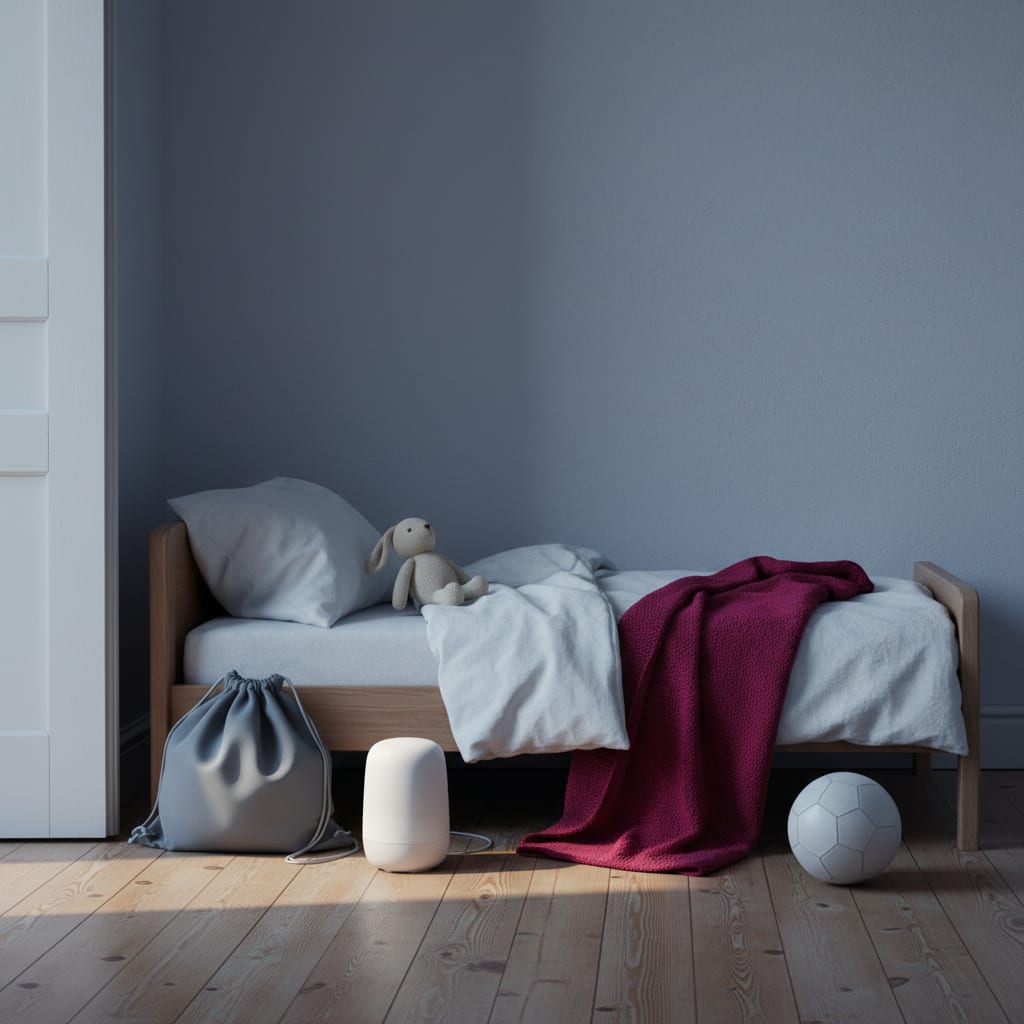
Then add exactly one comfort thing, chosen because you can keep offering it all week without resenting it. A hall light left on. A door open six inches. A soft toy that goes to the field and comes back. What doesn’t survive contact with a Tuesday: lying down until they sleep, three extra stories, or a promise to check every ten minutes.
Do the talking in daylight. The loose dog gets discussed on the drive to school, not at bedtime, and a short honest answer beats a vague one — vagueness leaves a child to fill the gap themselves. If it landed as something bigger than a bad night, The Stay At Home Mom’s Digest handles that depth better than a sports blog can.
Expect it to shrink: worse the first night, smaller the second, mostly gone by the fourth. If it isn’t shrinking after a week, or is changing shape rather than fading, that’s a conversation with your pediatrician rather than a new technique.
When it isn’t a fright at all
Half the “he’s suddenly scared at night” cases I’ve watched among team families turned out to be scheduling. An over-tired kid wakes more, and more dramatically. So does one whose bedtime has quietly drifted 40 minutes later since games started, or a toddler in an ordinary developmental wobble that has nothing to do with the airhorn.
Before building a plan around the scare, check the boring stuff: what time bedtime actually happened this week, how late the field ran, what else changed. A tournament weekend does this to families every time — that’s the three-way sleep problem a bracket creates, not a fear phase.
Where a plan actually helps
Everything above is general. What’s hard to look up is your kid, this week: a nine-month-old fine until the Saturday with the airhorn, a two-year-old whose nap has half-collapsed, a season that put dinner at 7:15. That’s the gap a personalised plan fills — roughly $20 a month, for the baby and toddler range, adjusting wake windows and bedtimes as the week actually goes instead of handing you a chart that assumed you were home at five.
It won’t make a thunderstorm quieter or a referee-shouter reasonable. It will tell you whether the waking has a schedule underneath it, which is the half you can change. A tool, not magic.

FAQ: sleep after a scare
How long does a child’s sleep stay disrupted after a scare?
Usually a few nights, shrinking each time — worst on night one, mostly resolved within a week. If it isn’t shrinking after a week, or is changing shape rather than fading, ask your pediatrician rather than trying a new technique.
Should I let my child sleep in my bed after a nightmare?
It’s the most expensive option available at 2am, because you’ll be renegotiating it for weeks. Comfort briefly in their own room instead. If you can’t face that on a particular night, a mattress on their floor is a smaller thing to undo than a new sleeping arrangement.
My toddler screams but doesn’t wake up — what is that?
A child who shouts or thrashes, looks through you, and remembers nothing in the morning is in something different from a bad dream, and it responds differently — comforting often prolongs it. Staying nearby and quiet is usually the whole job.
Should we stop bringing the little one to the sideline after a scary game?
Rarely necessary. Move where they sit — behind the bench rather than beside the fence, out of the traffic of a warm-up — before you drop the outing. The problem is usually the sightline, not the field.
My kid got hit at practice and now won’t sleep. What should I do?
If there was an actual impact or injury, that’s a call to your pediatrician or urgent care, not a bedtime question — get it looked at first. Once a clinician has cleared it, the sleep side is the same as any fright: identical routine, one small comfort, daylight conversations.