Kids' Soccer Cleat Sizing: Avoid the Size-Up Mistake
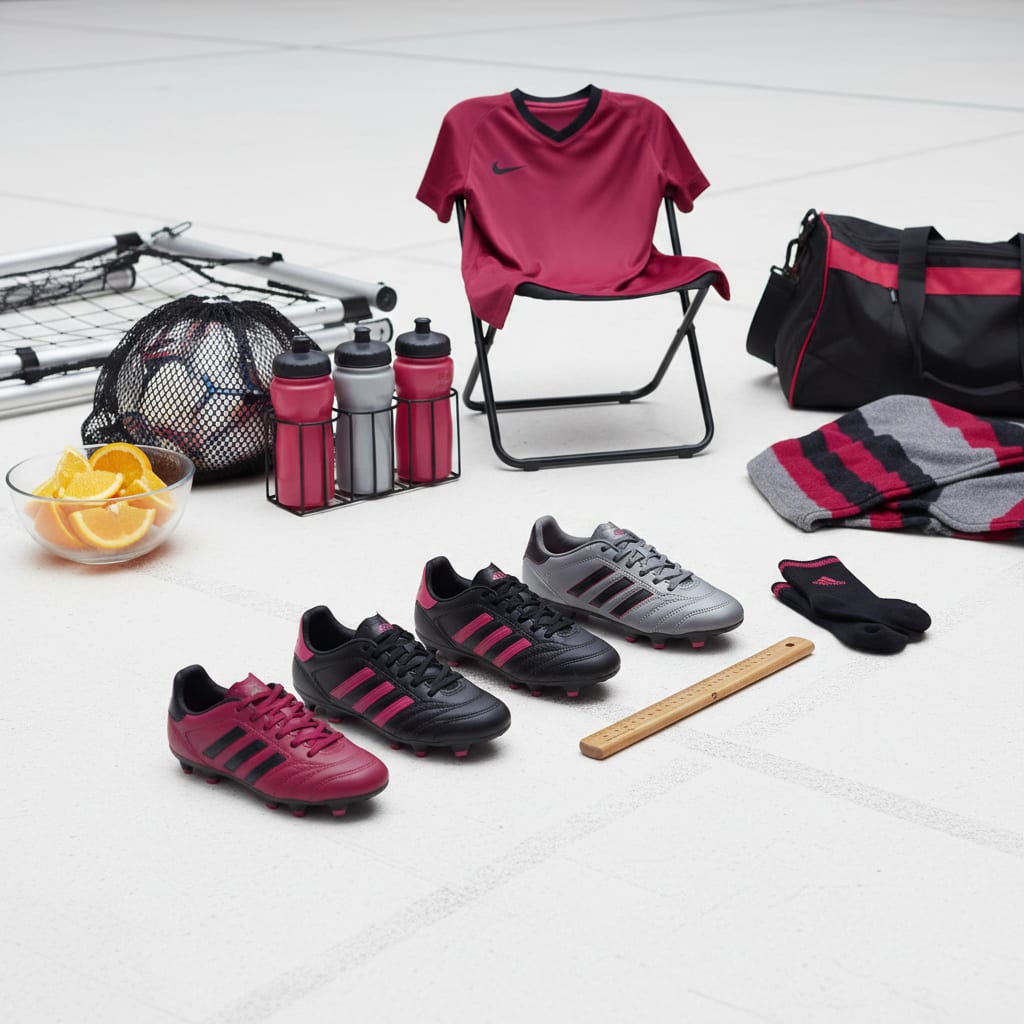
Sizing soccer cleats for kids comes down to one rule: buy the size that fits today, not the size they’ll grow into. Soccer cleats should fit snug — about a thumb’s width (roughly half an inch) between the big toe and the end of the shoe, heel locked, no side-to-side slide. Kids’ cleats generally run true to sneaker size or a touch small, so start at their current sneaker size and fit from there. Buying a full size up to “get two seasons out of them” is the classic mistake, and it costs more than it saves.
Why the size-up mistake costs you a season
A cleat is not a sneaker. A sneaker mostly needs to stay attached; a cleat is the interface between your kid and the one thing the whole sport revolves around. Too much room and the foot slides inside the shoe, so every touch is a little late and a little off-center, every cut has a half-step of slop in it, and blisters show up by week two. From row three of the bleachers you can actually spot the kids in size-up cleats — they’re the ones whose first touch keeps bouncing off the toe like the ball owes them money.
Here’s the scouting report: a cleat that fits for one season and gets replaced beats a cleat that “fits” for two seasons and works for neither. At youth prices, you’re not saving much — you’re paying full price for one good season either way, plus a bonus bad one.
The fit checklist (run it in the store or the kitchen)
- Socks on. Fit with actual soccer socks, not school socks. It changes the answer.
- The thumb test. Press at the big toe with the kid standing: about a thumb’s width of space, no more. If you can press a full finger-width flat, go down.
- Heel lock. Laced up, have the kid rise onto their toes and walk. The heel should not lift or slide.
- The stomp-and-cut. Have the kid jog a few steps and plant sideways (yes, in the aisle; the store survives). Watch for the foot sliding inside the shoe.
- The complaint audit. Ask where it touches. “Snug all over” is right. “Squished at the toe” or “loose at the heel” are both wrong, in opposite directions.
Fit every season. Kids’ feet grow in bursts, and last fall’s perfect cleat is frequently this spring’s blister factory.
Firm ground, turf, or indoor?
For a first rec season, a standard firm ground (FG) molded cleat is the default answer — it’s the one built for the ordinary grass field your league plays on. Turf shoes (dozens of small nubs) are for artificial turf and make a fine second shoe if your club practices on it; indoor flats are for futsal and gym floors. What a young kid should never wear: metal or replaceable studs (most youth leagues bar them anyway) and hand-me-down cleats molded to another kid’s stride — a worn-flat sole from cousin Jake is how ankles meet ground.
A worked example, so this isn’t abstract
You don’t need to spend big for a first season — you need the fit checklist above and a well-made basic cleat. The budget standard I keep recommending to new soccer parents is the adidas Goletto VIII firm-ground cleat — a plain, durable FG cleat that comes in the full run of kids’ sizes, laces normally, and costs the kind of money you can cheerfully re-spend when the growth spurt eats it in March. Fancier cleats exist; at this age they buy the parent a feeling, not the kid a first touch.
If your kid has a notably wide foot, look for cleats offered in wide sizing or built on a roomier last, and let the thumb test overrule the number on the box — with a wide foot it’s the width pinching at correct length that sends parents into the size-up mistake. Go wider, not longer.
Break-in, care, and the smell question
Modern youth cleats need almost no break-in — two backyard sessions before the first game does it (a handy excuse for ten minutes of driveway ball, if you needed one). Loosen the laces fully to get the shoe on; a five-year-old jamming a foot into a laced cleat will fold the heel flat and manufacture the exact slide you fitted against. Cleats live in the gear bag, not the trunk floor: knock the mud off, air-dry away from heaters, and accept that by August the smell is structural. That one has no fix. I checked.
FAQ: kids’ soccer cleat sizing
Should I buy kids’ soccer cleats a size bigger?
No. A half size of grow room is the absolute ceiling — a thumb’s width at the toe. A full size up means sliding, blisters, and a whole season of imprecise touches. Fit today’s foot; budget to replace when the foot wins.
How do kids’ cleat sizes compare to regular shoe sizes?
Most youth cleats run true to sneaker size or slightly small, but it varies by brand and model. Start with the current sneaker size, run the thumb test, and adjust from there. When ordering online, order two sizes and return one — it’s the kitchen-floor version of the store fitting.
How often do kids need new cleats?
Check fit at the start of every season and mid-season during a visible growth spurt. Many kids need a new pair each season; a fall pair sometimes survives to spring. The cleat tells you: toe pressed to the end, or a heel suddenly floating, means it’s time.
Are hand-me-down soccer cleats okay?
Lightly worn, right size, sole intact — fine, and half the league runs on them. Skip any pair with worn-down studs, a collapsed heel, or a visible lean, and never keep a hand-me-down that fails the thumb test just because it was free. Free cleats that don’t fit cost the most of all.