Best Sports for 5 Year Olds: An Honest Parent's Guide
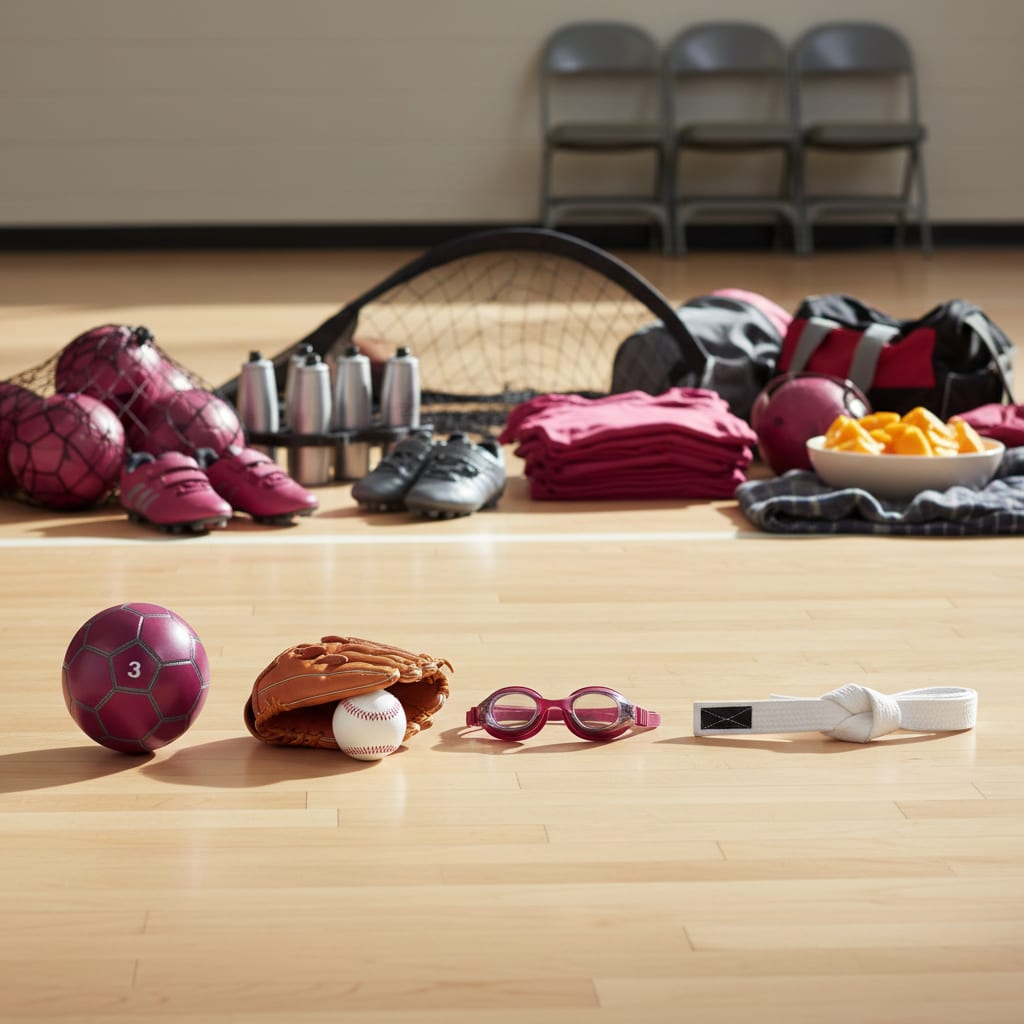
The best sports for 5 year olds are the ones built for 5-year-olds: rec soccer, t-ball, swim lessons, and beginner gymnastics or martial arts. Soccer is the easiest entry — constant motion, simple rules, seasons everywhere. T-ball teaches taking turns and wearing a glove, mostly in that order. Swimming is the one I’d call non-negotiable, though it’s a skill before it’s a sport. The honest answer underneath all of it: at five, the specific sport matters far less than a short, low-stakes local season your kid finishes wanting more.
What a season actually asks of a 5-year-old
Not much — and that’s the point. A good under-6 program asks a kid to show up, wear the shirt, chase the thing, and high-five at the end. Forty-five minutes, once or twice a week, eight to ten weeks. If a program near you asks for more — tryouts, positions, “player development pathways” — it’s built for the bleachers, not the grass.
My third kid is in his first t-ball season right now, and he spent one full inning examining a beetle at second base. He also asks every morning whether today is a t-ball day. Only one of those facts will matter in five years.
Soccer: the default for a reason
Rec soccer is the easiest first season in America: leagues everywhere, minimal gear, and a game that makes sense to a five-year-old in one sentence — kick the ball into that net. Everyone plays, everyone runs, nobody waits around for their moment (t-ball, we’ll get to you). And the swarm of kids chasing one ball like a school of fish is, frankly, elite entertainment.
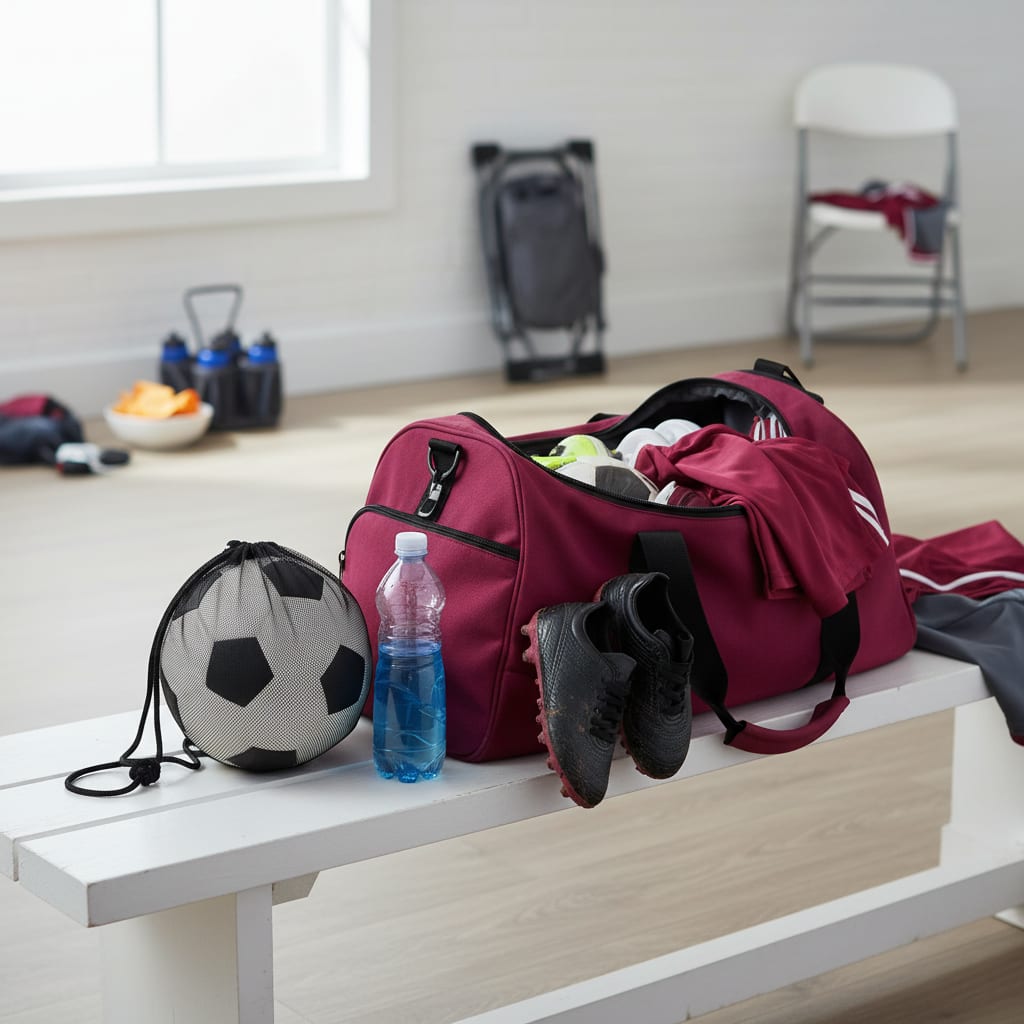
The gear list is genuinely small — a ball, shin guards, cleats if you want — and the full breakdown is in our youth soccer gear list. Skip the store’s version; it’s longer than the real one.
Choose it if: your kid runs everywhere anyway. Watch for: a kid who hangs back from the swarm. That’s not failure, it’s information — some kids want the individual-sport lane instead.
T-ball: slower, sweeter, more standing around
T-ball is baseball with the hard parts removed: the ball sits still, everybody bats, everybody “runs” the bases, and outs are more rumor than rule. It teaches things soccer doesn’t — waiting your turn, wearing a glove on the correct hand, cheering for a teammate while doing absolutely nothing.
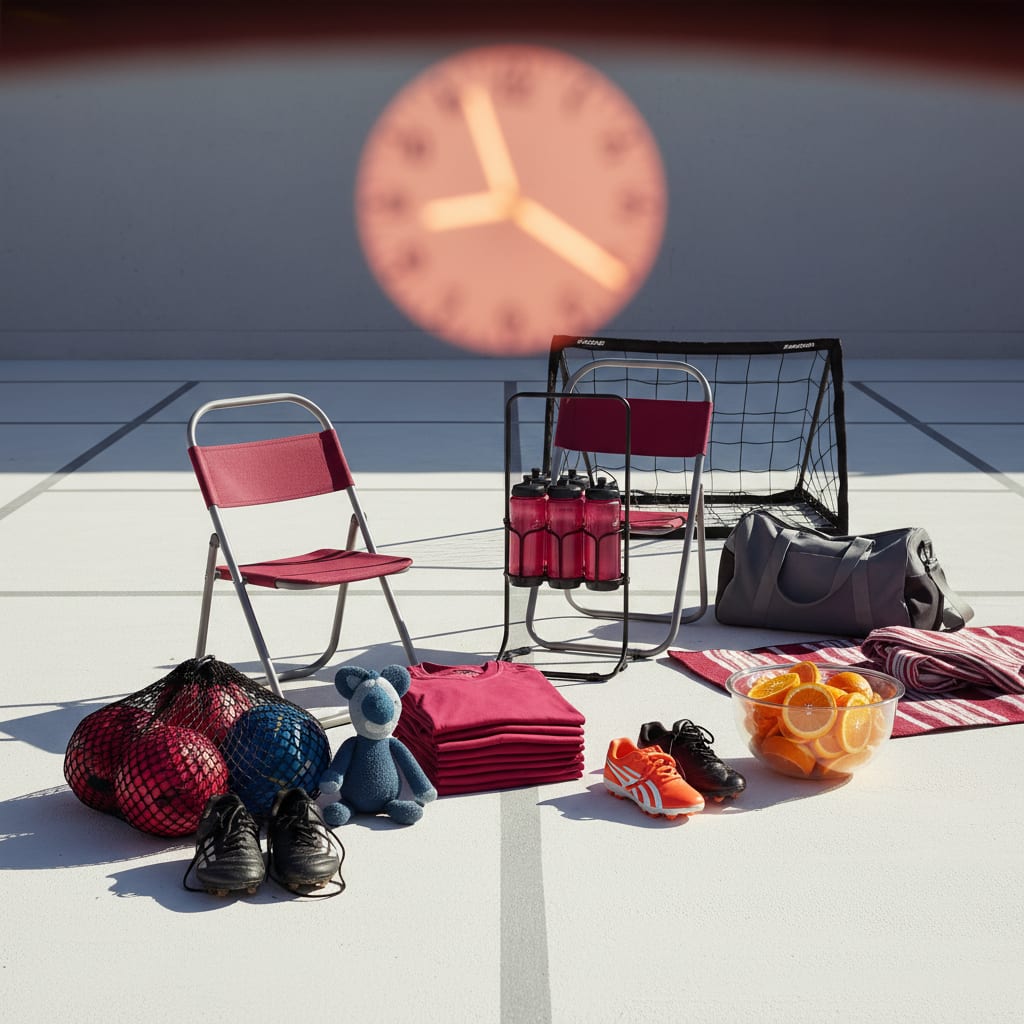
The trade-off is that same pace from the sideline: t-ball is a lot of watching a small person examine grass in the outfield. Bring a chair — the sideline kit exists for exactly this sport.
Choose it if: your kid likes routines, turns, and equipment. Watch for: the league that keeps score at five. Somebody’s dad asked for that, and it wasn’t for the kids.
Swimming: the one that isn’t optional
Swim lessons aren’t really a “sport” at five — they’re a life skill wearing a sport’s clothes — which is why they’re on this list anyway. Lessons run year-round, which makes swimming the one thing that layers neatly under a fall soccer or spring t-ball habit rather than competing with it. If you have bandwidth for exactly one organized activity this year, make it this one, and do the ball work in the backyard.
Gymnastics and martial arts: for the kid who isn’t a herd animal
Some five-year-olds take one look at a team swarm and file a formal objection. For those kids, beginner gymnastics and intro martial arts are excellent first sports: individual progress, clear structure, an instructor whose whole job is body control and listening. Martial arts adds the discipline theater — bowing, belts, “yes coach” — that certain kids find deeply satisfying. Both let a kid succeed without needing anyone else’s cooperation, which for some temperaments is the entire unlock.
The five sports for five year olds, side by side
Same five options, in the shape I use when somebody asks at pickup.
| Sport | Typical youngest age | Season length | What you actually buy | Billed as | Standing-around factor |
|---|---|---|---|---|---|
| Rec soccer | About 4 | 8-10 weeks | Ball, shin guards | One season fee | Very low |
| T-ball | About 4 | 8-10 weeks | Glove; cleats if required | One season fee | High |
| Swim lessons | Under 5 in most programs | Rolling; start any month | Goggles, a second towel | Monthly | None |
| Beginner gymnastics | Varies; ask the gym | Term blocks | Usually nothing | Monthly or per term | Low |
| Intro martial arts | Varies; ask the school | Open-ended | A uniform, from the school | Monthly | Low |
The column that ambushes families is the last one. A five-year-old who cannot yet tolerate twenty minutes of nothing will have a miserable t-ball season and a fine soccer one, and that has nothing to do with athleticism.
How to actually pick: the three-question scouting report
Forget the sport’s resume. Ask these:
- Does your kid chase, take turns, or self-direct? Chasers → soccer. Turn-takers → t-ball. Self-directors → gymnastics or martial arts.
- What’s genuinely close to your house? At five, a great program ten minutes away beats a perfect one thirty minutes away, every single time. You will feel this by week four.
- Can your family absorb the schedule? One short season, one kid activity at a time, is plenty. If you’re deciding between competitive tracks already, slow down and read rec vs travel — the answer at five is rec, and it isn’t close.
The dry truth from row three of the bleachers: when a five-year-old’s season goes badly it is almost never the sport. It is a tired kid, an overbooked calendar, or a grown-up who wanted it more than the kid did.
What a first season looks like, week by week
Every first season I have watched, in any of these five, runs roughly the same arc.
- Weeks 1-2. Nobody knows anything, including two of the coaches. Your kid may stand completely still for most of it. This is not a preview.
- Weeks 3-4. The rules land. Your kid does one recognizable thing on purpose, then looks straight at you to confirm you saw it. You saw it.
- Weeks 5-7. The dip. The novelty is gone, the walk from the car gets slower, and this is where families quietly conclude the sport “didn’t work.” It is the ordinary mid-season slump, and it is on schedule.
- Weeks 8-10. Competence, suddenly and unevenly. The thing that was impossible in week one happens twice in one session and nobody remarks on it.
The only week that predicts anything is the last one, and all it predicts is whether they want to sign up again.
What it costs (roughly, and honestly)
Rec leagues at this age typically run somewhere around $75–$200 a season depending on your area, with t-ball and soccer at the cheaper end. Watch the billing shape in the table above rather than the headline number: a rec season is one fee and then it stops, while gym, swim and martial arts keep billing through the months you are not thinking about them. Run the monthly one out over a year before you compare the two. Gear for any of them is modest if you resist the sporting-goods store’s opening bid. There is no equipment purchase at age five that meaningfully affects performance. Buy for fit and comfort; save the technology arguments for later.
FAQ: sports for 5-year-olds
What is the single best first sport for a 5-year-old?
Rec soccer, if your kid tolerates group chaos — it’s everywhere, cheap, and always moving. If they don’t, t-ball for turn-takers or gymnastics/martial arts for kids who prefer their own lane. Swim lessons alongside any of them.
Is 5 too late or too early to start sports?
Neither. Five sits comfortably in the normal starting window for organized rec sports — programs are built expecting brand-new players. Kids who start at seven catch up to kids who started at four with remarkable speed, so there’s no clock to beat.
Should a 5-year-old play more than one sport at a time?
One organized season at a time is my strong recommendation, with swim lessons as the only stackable exception. The limiting factor isn’t the kid’s interest — it’s family evenings, and the youngest kid’s bedtime always pays the bill first.
What if my 5-year-old refuses to participate mid-season?
Extremely normal, rarely permanent. Keep bringing them, keep it light, let them watch from your lap for a game if needed, and don’t buy the exit at the first wobble. If the refusal hardens for weeks, it’s the program or the timing — try a different sport next season, not a lecture this one.