Youth Soccer Gear List: What to Buy, What to Skip
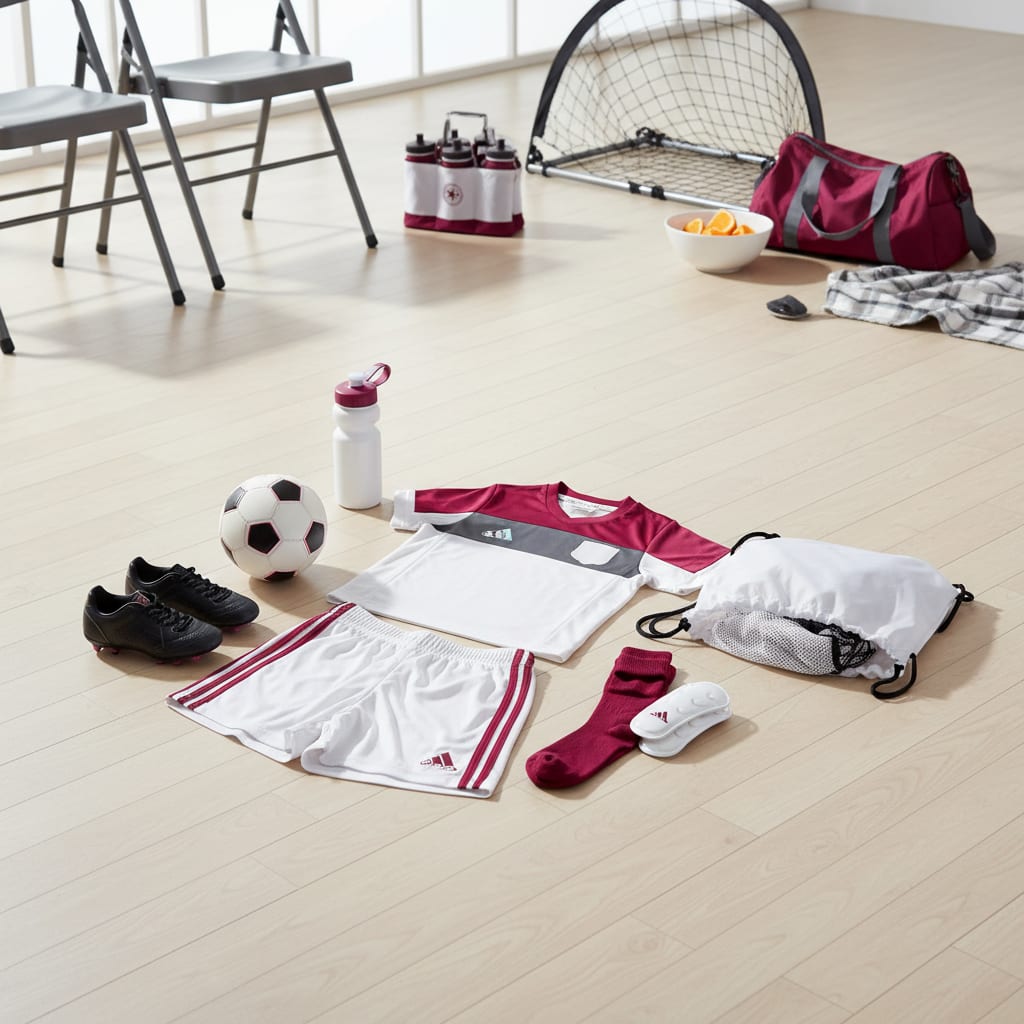
The youth soccer gear list is genuinely short: a correctly sized ball, shin guards with socks that cover them, cleats that fit, a water bottle, and something to carry it all. That’s the whole roster — everything a first rec season requires, usually for well under $100 total. The sporting-goods store will propose a much longer list. The store is wrong. Here’s the scouting report on each piece, the sizing charts that prevent the classic mistakes, and the aisle of extras you have my permission to walk past.
Ball size by age: the chart that settles it
The wrong-size ball is the most common gear mistake in youth soccer after oversized cleats — and it’s usually a well-meaning size 5 bought “because that’s what they use on TV.”
| Age | Ball size |
|---|---|
| 3–8 | Size 3 |
| 8–12 | Size 4 |
| 12+ | Size 5 |
Your league’s age-group rules win if they differ, so check the welcome email first. The full soccer ball size by age chart has the league age groups, sizes 1 and 2, and the indoor futsal ball. But if you’re buying a backyard ball, buy the size your kid’s age group actually plays: a size 3 in first-grade hands teaches real touches, while a size 5 teaches toe-poking a ball that outweighs the foot arguing with it.
One good ball is plenty. The canonical example I hand new parents: the Select Numero 10 — a classic, well-made training ball that comes in sizes 4 and 5 (for a size 3, the ball-size chart linked above names one), holds air, and survives being left in the rain, which it will be. Skip the character-print balls from the toy aisle; they’re beach balls in costume and they dent.
Shin guards: the fit rule nobody explains
Shin guards are sized by height, not age — check the size chart on the package against your kid, not their birthday. Brands disagree on what each letter means, so our shin guard size chart lines up Nike, Vizari and Storelli by height. Fit check: the guard should cover the shin from a couple of fingers below the knee to a bit above the ankle bone, and it should stay put through a jog. If it spins around the leg mid-practice, it’s too big; if it sits like a postage stamp on the shin, too small.
Two styles matter at youth level: slip-in sleeves and ankle-guard styles with a stirrup and padded ankle bones. For new and younger players I default to the ankle-guard style, such as the Vizari Malaga — first seasons involve a lot of enthusiastic shin-adjacent kicking, and the extra coverage earns its keep. Whatever you buy, remember the non-negotiable pairing: soccer socks go over shin guards, and the socks must be long enough to actually do that. Two pairs; one will be wet.
Cleats, briefly
Cleats get their own full sizing guide — the short version: snug fit, thumb’s width at the toe, firm-ground style, and do not buy a size up “for next year.” At most rec ages, sneakers are technically allowed; cleats are still worth it for the not-falling-down alone.
The carry-and-sideline layer
- Water bottle: the biggest one your kid can carry, filled by the kid as part of the ritual.
- A bag: any drawstring or small duffel that lives by the door with the gear in it. What goes in the bag is my department; where the bag lives and how it gets to the car on time is a logistics discipline, and That Suburban Momma’s gear-staging systems are the authority there.
- For you: a chair and shade — covered properly in the sideline kit.
- Snacks: a checklist line, not a chapter — Hey Mom Blog owns the team-snack arts.
What to skip (the aisle of good intentions)
Named so you recognize them, deliberately unlinked:
- Goalkeeper gloves — until your kid is actually assigned keeper duties in a league that plays with keepers. U-6 does not.
- Full-size goals for the backyard — a pop-up goal does the same job for a tenth of the garage space; see the backyard drills setup.
- Agility ladders, cone kits with carrying cases, “speed chutes” — training-aid cosplay at this age. A ball and a wall out-develop all of them.
- Compression layers, sleeves, headbands — sweat management for professionals, dress-up for seven-year-olds.
- The $150 cleat — buys the parent a feeling, not the kid a touch.
If a purchase doesn’t touch ball, shin, foot, or thirst, it can wait a season. No exceptions have emerged in three kids’ worth of seasons.
The first-season checklist (screenshot this)
- Ball — size 3 (under 8) or size 4 (8–12)
- Shin guards — sized by height, ankle-guard style for beginners
- Soccer socks ×2 — long enough to cover the guards
- Cleats — firm ground, thumb-test fit
- Water bottle — big, kid-fillable
- Bag — anything with a drawstring
- Shorts/tee until the uniform arrives
Print it, stick it on the fridge, and ignore everything else until the league itself asks for it.
FAQ: youth soccer gear
What does a kid actually need for their first soccer season?
Ball, shin guards, long socks, cleats, water bottle, bag. Most leagues provide the jersey. Total damage typically lands somewhere around $60–$100 buying new — less with one good hand-me-down.
What size soccer ball for a 6 year old?
Size 3. It looks small to adult eyes — that’s correct. The right ball is the one the kid’s foot can move with intention, not the one that matches the World Cup.
Do young kids really need cleats for soccer?
Most rec leagues allow sneakers at the youngest ages, so it’s a comfort call, not a rules call. Cleats earn their price in traction alone the first time the field is dewy — just fit them properly rather than a size up.
Are expensive soccer balls and cleats worth it for kids?
Not at rec ages. Construction quality matters (a stitched or thermally bonded ball that holds air beats a toy-store ball), but past the solid-basic tier you’re funding marketing. Spend the difference on a second pair of socks; that one pays dividends weekly.