The Youth Soccer Bag: What's Actually in It (by Age)
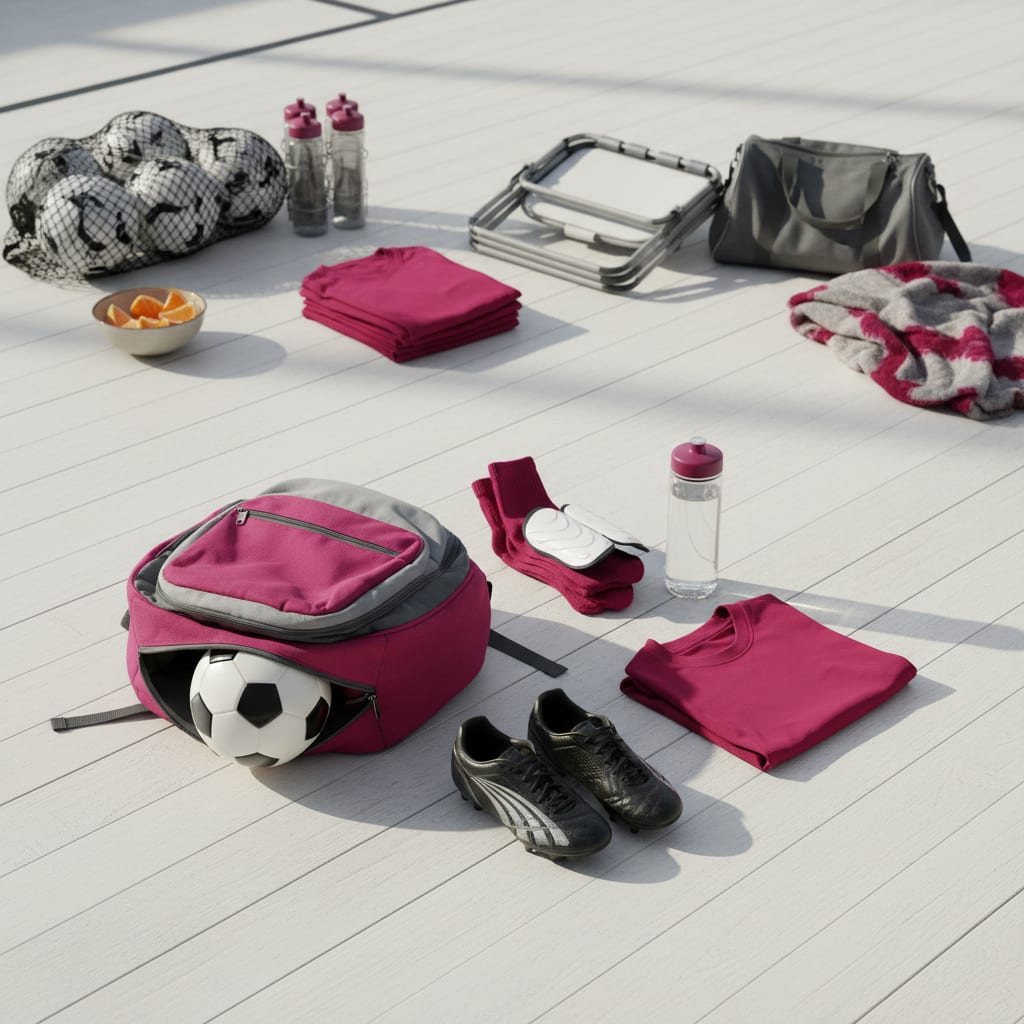
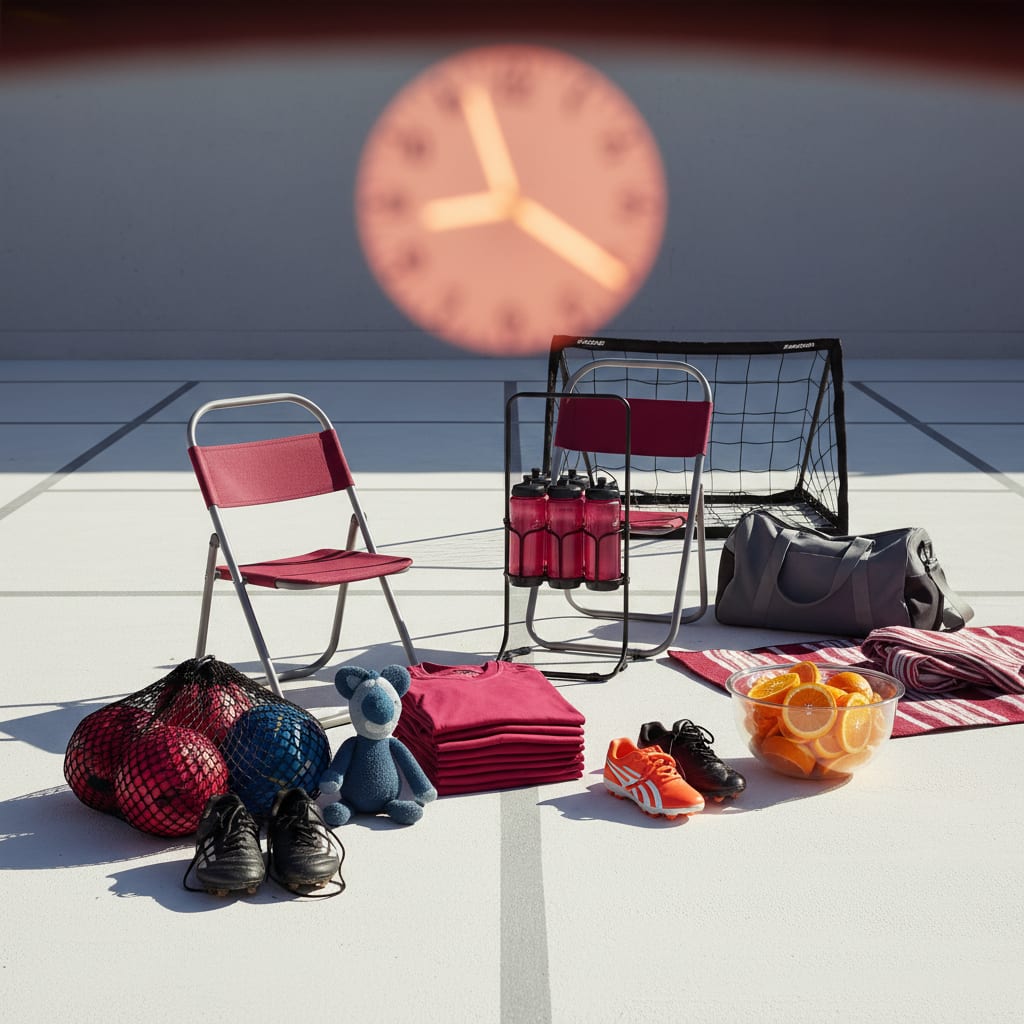
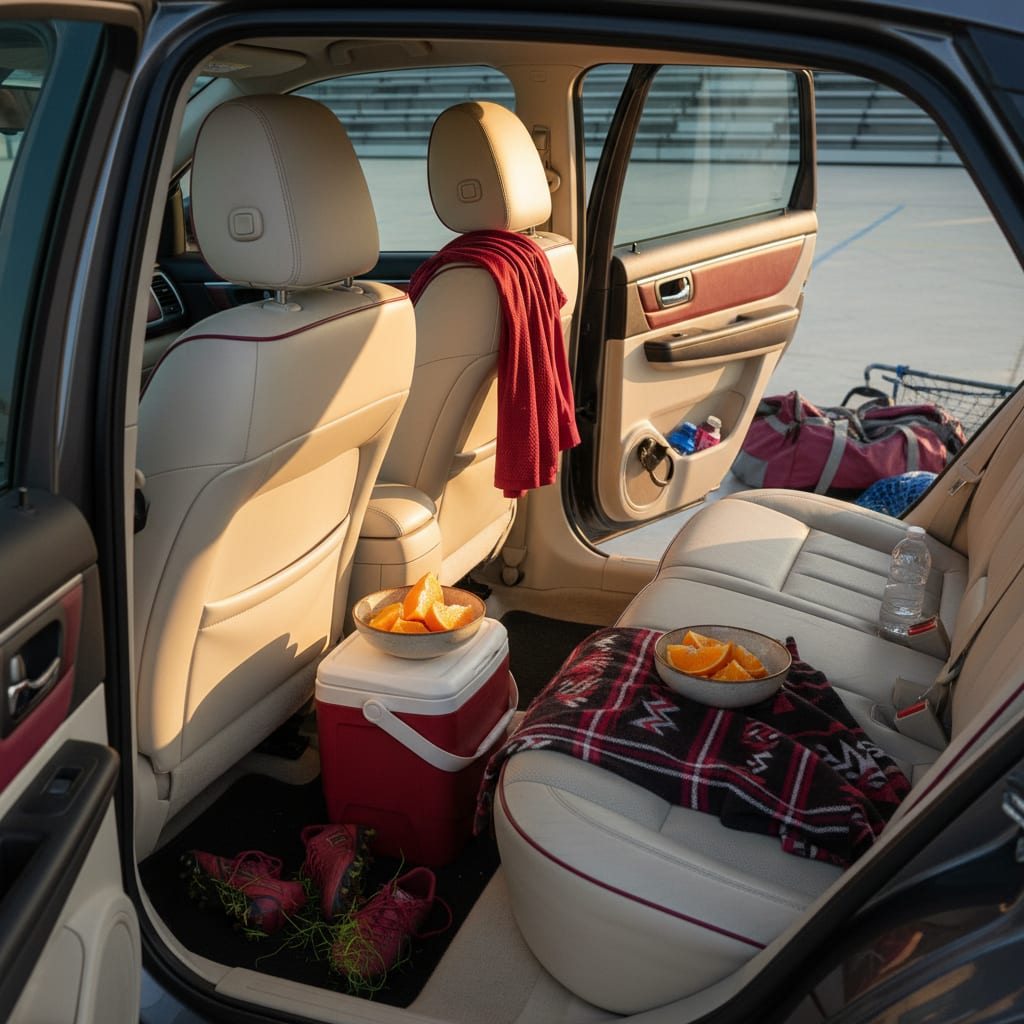
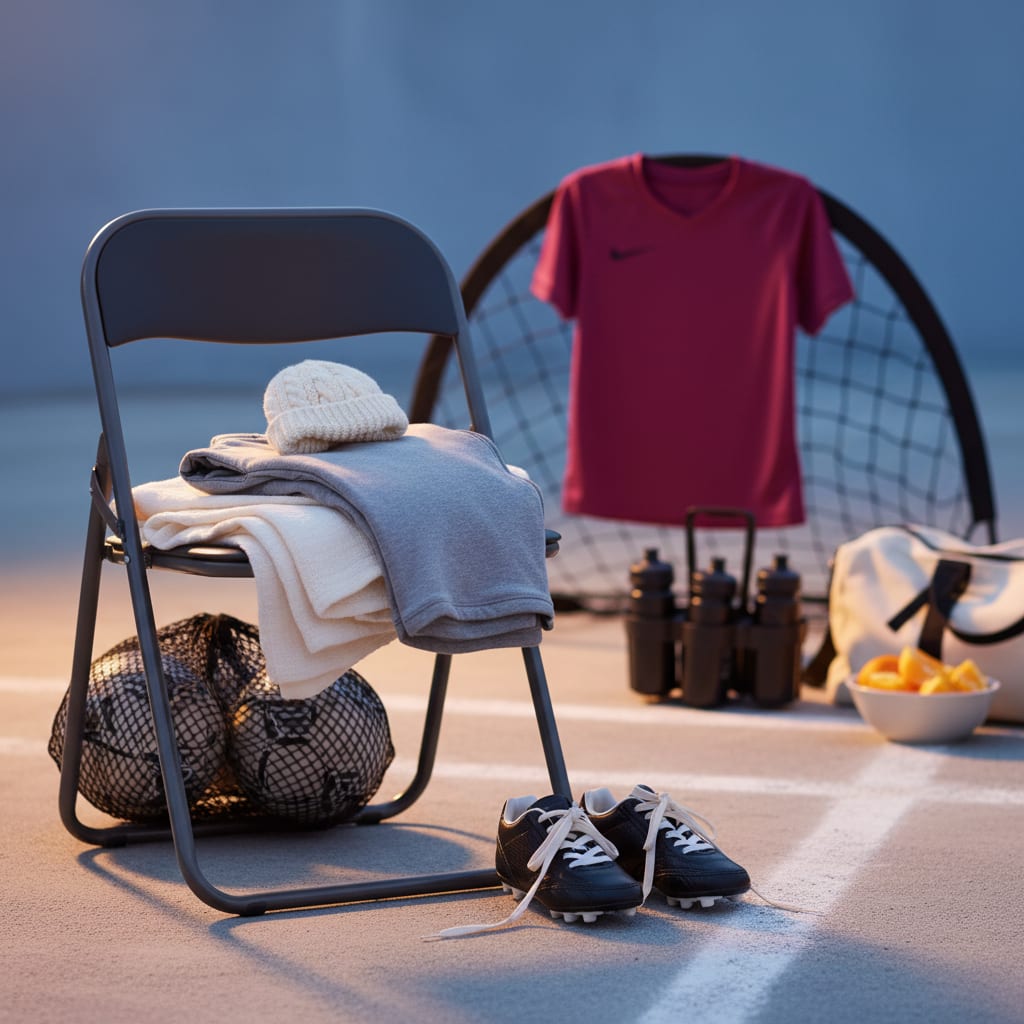
A youth soccer bag needs five things and nothing else: cleats, shin guards, socks long enough to cover them, a full water bottle, and the ball. Everything past that is age-dependent — a U6 player needs a hair tie and a snack, a U12 player needs a spare shirt, tape, and a second pair of socks. The bag is not a storage unit; it’s a pre-packed unit that leaves the house complete. Here’s what belongs in it at each age, what silently accumulates in it, and the reset that keeps Saturday from starting with a search.
The constant five (every age, every season)
These live in the bag permanently and get checked, not packed:
- Cleats. In the bag, not on the kid, not in the mudroom. Fit checked at the start of each season — the size-up mistake is the most expensive thing in youth soccer and it hides for weeks.
- Shin guards. Sized by height, not age. If they spin around the leg, they’re too big.
- Socks. Long enough to fully cover the guards, because that’s a rule and refs do check. Two pairs — one is always damp.
- Water bottle. Full when it leaves the house. Field spigots are folklore.
- The ball, correctly sized, inflated. If your league does team balls, this one is the practice ball anyway.
That’s the whole non-negotiable list. The full buy-once breakdown lives in the youth soccer gear list; this post is about what travels.
U6–U8: keep it embarrassingly light
At this age the bag’s real job is to be carryable by the person whose name is on it. A small drawstring sack does the entire job. Add to the constant five:
- One snack that doesn’t melt and one that does not require a parent’s hands to open.
- A hair tie, plus a spare taped inside the bag. Ponytails fail at the worst possible moment and a coach cannot fix one.
- A light layer — a hoodie or a quarter-zip — because a 45-minute session ends at a different temperature than it started.
- Nothing else. No cones, no extra ball, no equipment they’ve seen an older sibling carry.
Dry sideline observation: the kids who lose things are not the disorganized ones. They’re the ones carrying the most stuff. Cut the inventory and the losses drop with it.
U9–U11: the bag gets a shape
Around third or fourth grade the drawstring sack starts failing — the cleats punch through the fabric, the ball won’t stay in, and a wet kit contaminates everything else. This is the age for a real backpack with a bottom ball compartment, which is exactly the feature you’re paying for: it isolates the muddy round object from the dry cloth objects. The workhorse version most of the sideline eventually owns is the adidas Stadium soccer backpack — zippered ball pocket underneath, mesh bottle pockets on both sides, and a base that survives being set down in wet grass twice a week.
Additions at this age:
- Second pair of socks, permanently. Half-time sock changes turn a miserable rainy game into a fine one.
- A pinnie or spare shirt in a team color, for scrimmages and for the day the uniform is in the wash.
- Small first-aid pouch — adhesive bandages and wipes only. Anything beyond that is the league’s first-aider’s job, not the bag’s.
- Their own name on everything. Marker on the tag of every sock, guard, and bottle. Six kids on a U10 team own the same bottle.
U12 and up: the kid packs it, you audit it
The handover happens here, and it’s the point of the whole exercise. The player packs the bag; you audit it Friday night for one season, then stop auditing. What their bag carries that a U9’s doesn’t:
- Tape — a small roll for socks, guards, and the endless taping rituals older kids invent.
- A ball pump with a needle (a kit like the Franklin Ball Maintenance Kit adds spare needles and a gauge), because at this age they’ll be the one who notices the ball is soft.
- Weather layers as a system: long-sleeve base layer, gloves in the cold months, a rain shell that packs down small.
- Spare laces. They snap at warmups, exclusively.
- A dedicated wet bag — one zip pouch for anything that comes off the field soaked, so the rest of the bag stays civilized.
What is actually in the bag right now
Every mid-season bag audit turns up the same five archaeological layers: one flattened granola bar, a sock without its partner, a mouthguard from a different sport, three field-registration wristbands, and a small amount of sand from a field you have never visited. This is normal. It is also why the reset exists.
The Sunday reset, four minutes: empty it completely onto the floor. Wet stuff to the laundry, trash to the trash, refill the snack, refill the bottle, check the ball’s air, re-pack the constant five. Zip it. Done until Saturday.
Where the packed bag then lives — the hook, the bin, the launch-pad system that gets it into the car without a search — is family logistics rather than gear, and That Suburban Momma has built out the staging side far more thoroughly than I ever will. Team-snack duty is likewise its own genre; if the rotation has landed on you, Hey Mom Blog has the sideline-food playbook.
What does not go in the soccer bag
- Valuables. Phones, tablets, cash. Bags sit unattended on a touchline for two hours.
- A full change of clothes for every scenario. One spare shirt is a system; four is a suitcase.
- Sibling supplies. The little one’s entertainment gets its own bag — mixing them means one missing sock derails two kids.
- Anything belonging to you. Your chair, blanket, coffee, and sunscreen are the parent sideline kit, which is a separate bag with a separate job.
Two bags, two owners, two Sunday resets. It sounds fussier than it is, and it’s the difference between arriving assembled and arriving in pieces.
FAQ: youth soccer bag essentials
What should a kid bring to soccer practice?
Cleats, shin guards, tall socks, a full water bottle, and a ball. Add a light layer and a snack. That’s a complete practice bag at any age — everything else is optional or age-specific.
What size soccer bag does a kid need?
Under about age 9, a small drawstring sack is plenty and easier for them to carry. From roughly U9 up, a backpack with a separate bottom ball compartment earns its keep because it keeps a muddy ball away from dry clothes.
Does my kid need their own soccer ball if the team provides one?
For games, no. For practice and for skill work at home, yes — leagues usually ask players to bring a correctly sized ball to training, and a ball at home is the whole basis of a backyard practice habit. One ball covers both.
How do I keep the soccer bag from smelling?
Empty it fully once a week rather than topping it up, keep a dedicated zip pouch for anything wet, and never leave damp shin guards zipped inside overnight. Guards and cleats want air; the bag is where smells go to compound.
Should my child pack their own soccer bag?
Around U12 is the natural handover. Let them pack it, audit it quietly on Friday nights for one season, then stop. A kid who has arrived at one game without socks learns the checklist faster than any parent can teach it.