Baseball Glove Sizes for Kids: The Chart (T-Ball to 12U)
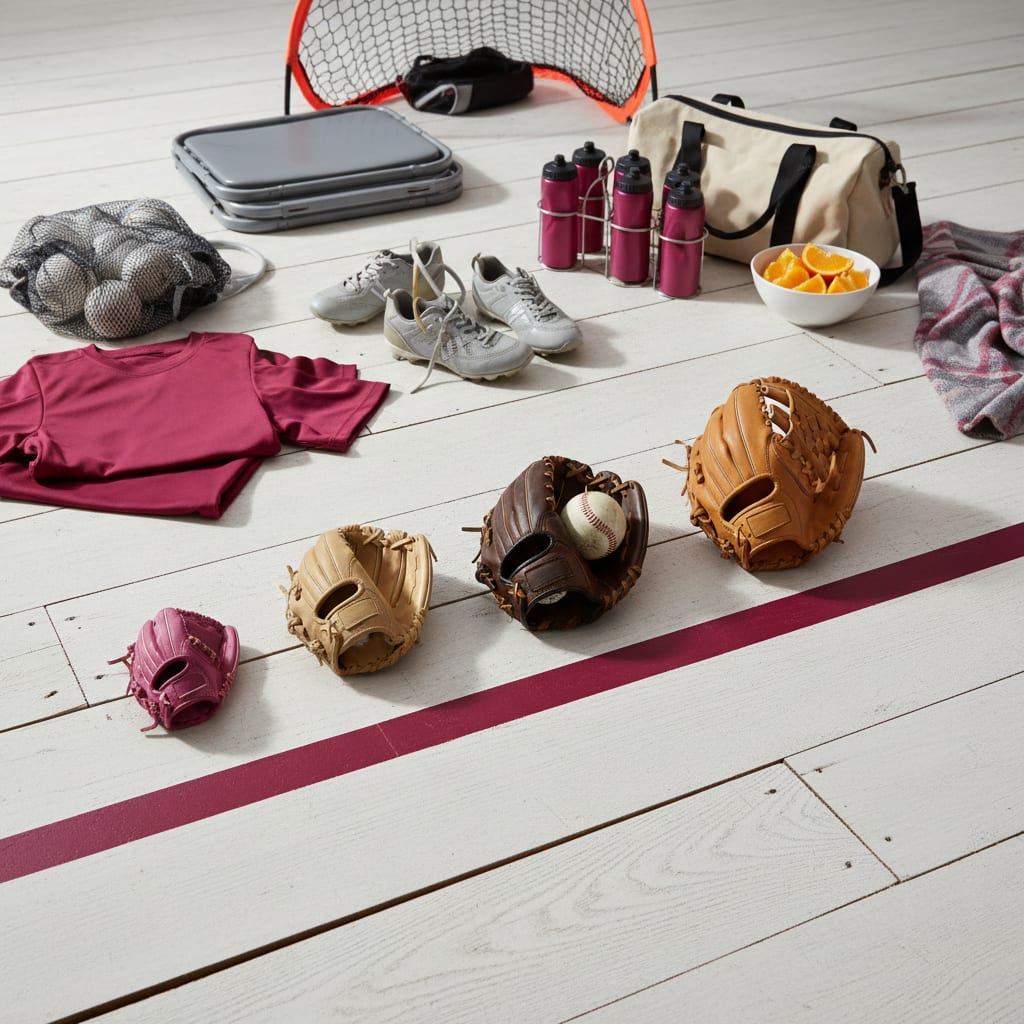
Youth baseball gloves are sized in inches, measured from the top of the index finger down the palm to the heel — not by shoe size, not by the kid’s age on the box. The short version: t-ball players (roughly 3–6) want 8.5 to 10 inches, 7–8-year-olds want about 10 to 11, and 9–12U players want 10.75 to 12 depending on where they play. Bigger is not better. A glove a child cannot close is a glove that drops the ball, and it is the single most common mistake at the register.
How a baseball glove is measured
Manufacturers stamp the size on the thumb or the pinky side of the glove, and it’s a length measurement, not a circumference: run a tape from the tip of the index finger, down the middle of the palm, to the bottom edge of the heel. That’s the number.
Two exceptions worth knowing before you shop:
- Catcher’s mitts are sized by circumference around the outside of the mitt, not by length. Youth catcher’s mitts typically run about 29.5 to 31 inches, which is why a 31-inch mitt is not a giant.
- First base mitts are longer and shallower than a fielder’s glove, with no individual finger stalls on the outside. Youth first base mitts commonly run 11.5 to 12 inches.
For a kid under about 9, neither of those is a purchase you need to make. Leagues at that level rotate positions and usually own a mitt for whoever’s catching this inning.
The youth baseball glove size chart
This is the chart I text to people every February. Treat it as a starting point, then run the fit test below, because hand size at these ages varies more than age does.
| Age / level | Glove size | Notes |
|---|---|---|
| 3–4 (t-ball intro) | 8.5”–9.5” | Soft, light, closes easily; many come pre-shaped |
| 5–6 (t-ball / coach pitch) | 9.5”–10.5” | The catching hand is still weak — favor small and floppy |
| 7–8 (coach pitch / machine) | 10”–11” | First “real” glove for a lot of kids |
| 9–10 (10U) | 10.75”–11.5” | Position starts to matter; infield end of the range is safest |
| 11–12 (12U) | 11”–12” | Full position sizing applies |
| Youth softball, 8–12 | 10.5”–12.5” | Bigger ball; see the softball glove size chart |
Overlap between rows is intentional. A small-handed nine-year-old in a 10.75 is better equipped than the same kid in an 11.5 that hangs off the hand.
Position sizing, once positions are real
Below 9U, ignore this table and buy a general fielder’s glove. From roughly 10U up, the shape starts to earn its keep:
| Position | Typical youth size | Why |
|---|---|---|
| Infield (2B, SS, 3B) | 10.75”–11.5” | Shallow pocket for a fast transfer to the throwing hand |
| Outfield | 11.5”–12.25” | Longer glove, deeper pocket, more reach on a fly ball |
| Pitcher | 11.5”–12” | Closed web so the grip stays hidden |
| First base | 11.5”–12” (mitt) | Long, shallow scoop for picking throws |
| Catcher | 29.5”–31” (circumference) | Heavy padding; a different animal entirely |
Web style matters less than every sales associate implies. Closed webs (basket, modified trap) hide the ball and the hand — pitchers and a lot of infielders like them. Open webs (I-web, H-web) let dirt fall through and let an outfielder look up through the glove at a high fly. At 10U, either is fine, and your kid will pick based on which one looks cool. Let them. Fit is the thing you should be stubborn about.
The fit test that beats the chart
Do this in the store, or on the kitchen floor with the return label still in the box.
- Hand all the way in. Fingers to the ends of the stalls, glove seated on the hand, not swimming behind it.
- The squeeze. Hand out flat, then close it into a fist. The glove should close into a taco with a single squeeze. If your kid needs two hands or a facial expression, it’s too big or too stiff.
- The shake test. Have them shake their arm hard, wrist loose. The glove should stay put. A glove that flies off is a glove they’ll be re-seating between every pitch.
- The pocket check. Drop a ball in. It should sit in the pocket, not swallow into the heel and not perch on the fingers.
- The soft-toss ask. Ten easy tosses, then ask where it feels weird. “Heavy” means size down. “Loose at the wrist” means tighten the strap or size down. “Fine” is the answer you paid for.
Sideline observation from a mother of a t-baller: the number one reason a five-year-old drops everything is not fear and not coordination. It’s that Grandma bought a 10.5-inch glove for a hand the size of a dinner roll.
Leather, synthetic, or “game ready”?
Three material tiers, and price mostly tracks them.
Synthetic / vinyl. Light, cheap, closes out of the box, and lasts about two seasons before it goes floppy. For t-ball and coach pitch this is genuinely the correct choice — the whole point at that age is a glove that a weak hand can close today.
Treated or “game ready” leather. Real leather that’s been pre-conditioned at the factory so it’s usable immediately rather than after a month of work. This is the sweet spot from about 7 or 8 up, and it’s where most well-known youth series live.
Full-grain, break-it-in-yourself leather. Stiff, expensive, excellent, and completely wasted on a nine-year-old — by the time it’s broken in, the hand has grown. Save this for the kid who has a position and an opinion about it, usually 12U and up.
The kid does not need the third tier. The kid needs a glove that closes and a parent who will play catch.
A worked example, so this isn’t abstract
For a first real glove — the 6-to-9 range, where you want leather-ish feel without a break-in project — the one I keep recommending is the Rawlings Players Series youth glove. It ships essentially broken in, comes in the small youth sizes that actually exist for small hands, and it’s priced like a thing that’s going to spend a summer face-down in a dugout, because it is.
Named alternatives if that one’s out of stock in your size: Franklin Field Master (synthetic, very light, the t-ball default in half the dugouts I’ve stood next to), Wilson A360/A450 as sizes climb, and Mizuno Prospect for kids with narrow hands, which is a real fit problem nobody puts on a chart. All three are common enough that your local sporting-goods store will have one on the wall to try on — and trying on is worth a trip, because glove sizing is the one gear category where a store beats a screen.
Rough budget planning, hedged because prices move: a t-ball synthetic is usually the cheapest glove in the store, a solid youth leather series lands in the middle, and anything with a pro player’s name on it is a want, not a need. Buy the middle and spend the difference on a second ball.
Break-in: what works, and what wrecks a glove
For a stiff-ish glove, the whole method is: play catch with it. Everything else is an accelerant.
- Conditioner, sparingly. A pea-sized amount of glove conditioner worked into the pocket and hinge. More is not better; oversaturated leather goes heavy and dies young.
- Ball in the pocket, tied shut. Wrap it with a belt or a couple of rubber bands overnight in the shape you want the pocket to take.
- Ten minutes of catch, most days. Real repetitions shape the glove exactly where that kid’s hand needs it. Our ten-minute driveway habit doubles as the break-in program, which is a good excuse to have in your pocket.
What actually wrecks gloves: microwaving, ovens, driving a car over it, hot water, and Vaseline. Heat cooks the oils out of the leather and takes years off the glove in an afternoon. The internet is confidently wrong about this one.
Storage: ball in the pocket, glove out of the trunk. A glove left in a hot car all summer comes back stiff and cracked, the same way cleats left in the trunk come back a shape nobody’s foot is.
What to skip
- Glove-and-ball starter sets from the toy aisle. The ball is foam and the glove is a mitten. If you want a soft ball for a nervous beginner, buy a proper reduced-injury-factor ball separately.
- Buying big to “grow into.” The same failure mode that runs through every buy-once youth gear list: a season of dropped balls to save one purchase you’ll make anyway.
- A catcher’s mitt before your kid is a catcher. Leagues at 10U and below almost always have one.
- Left-hand versus right-hand confusion. A “right-hand throw” glove goes on the left hand. This is the single most-returned item in youth baseball and it happens to everybody once.
- Batting gloves at t-ball. They’re fine and they’re fun and they are not equipment yet.
FAQ: kids’ baseball glove sizes
What size baseball glove for a 5 year old?
Roughly 9.5 to 10.5 inches, in the lightest, softest material you can find. At this age closability beats everything — a smaller glove your kid can squeeze shut catches more balls than a bigger one they can’t.
What size glove does a 10 year old need?
Most 10-year-olds land between 10.75 and 11.5 inches. Infielders sit at the shorter end for a quicker transfer, outfielders at the longer end. Run the squeeze test before you decide the position argument.
How do I know if a glove is too big?
Three tells: it won’t close in one squeeze, it slides or flies off when they shake their arm, or the ball keeps hitting the heel instead of the pocket. Any one of those means size down, regardless of what the age chart says.
Should I buy leather or synthetic for a first glove?
Synthetic for t-ball and coach pitch, treated leather from about 7 or 8. The break-in-it-yourself leather glove is a purchase for a kid whose hand has stopped growing every four months.
How long does a youth baseball glove last?
Usually two to three seasons, and the hand outgrows it before the glove wears out. Check the fit every spring, the same way you’d re-check cleats — the growth spurt does the damage, not the leather. If you’re still at the which-sport-first stage, one soft glove and a tee is the entire baseball budget.
Do left-handed kids need a special glove?
Yes. A left-handed thrower wears the glove on the right hand and needs a glove labeled “left-hand throw.” Stock is thinner and it sells out earlier, so buy in February, not the week before opening day.