How to Break In a Baseball Glove (Kids' Gloves Included)
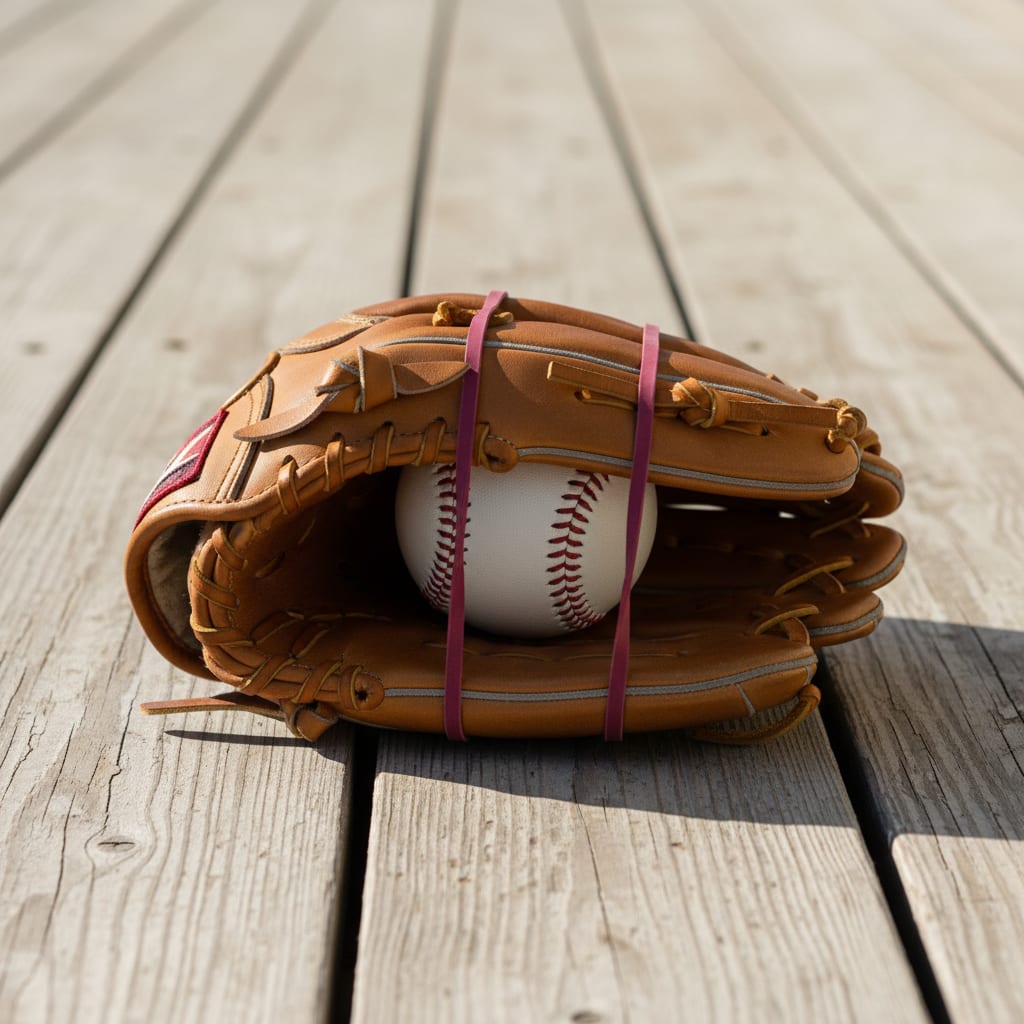
To break in a baseball glove, loosen the stiff hinge at the heel by hand, rub in a light coat of glove conditioner, tie a ball into the pocket with rubber bands for a day, then play catch with it, a lot. That is Rawlings’ own method, and the catch is the part that does most of the work. Skip the oven, the microwave and the car tire. Rawlings warns heat “can damage your glove and impact your warranty”, although Wilson’s method uses warm water, so follow the maker of the glove you own. Most kids’ synthetic gloves need very little of any of this.
First, read the tag: what kind of glove is it?
Before anyone reaches for a mallet, find out what you’re breaking in, because a kids’ glove and a teenager’s leather glove are different jobs.
- Synthetic or “game ready” youth gloves. Most t-ball and first-season gloves are synthetic or soft, thin leather. A Manhattan glove shop owner told Fatherly that those gloves “almost always come broken in.” There’s not much to do, and not much you can do.
- Real leather. The same shop owner put the move to a leather or mostly-leather glove at around age 9. This is the glove that arrives stiff as a board and actually needs the work below.
- Premium leather. Rawlings says its top models “can take longer to break-in” because of their fuller, tighter grain. If a twelve-year-old got a pro-pattern glove for Christmas, budget weeks of catch, not an afternoon.
If the glove is the wrong size, no break-in fixes it. The youth baseball glove size chart is the place to start before any of this.
The Rawlings way, step by step
Rawlings publishes a five-step break-in guide, and it’s the gentlest method of the big brands, which is why it’s the default for a kid’s glove.
- Work the padding. Grab the heel of the glove with both hands and twist the thumb and pinky “down and in”, so the top of the pinky touches the bottom of the thumb, then the other way. The two hinges near the heel are where most gloves are stiffest, and this is the step a small kid physically can’t do, so it’s yours.
- Soften the leather, lightly. A light coating of glove oil or conditioner. Rawlings is blunt: “Do not saturate the glove with oil,” and the leather should still offer resistance when you push and pull on it. A small tube like the Rawlings glove conditioner is the worked example, and a little goes a long way.
- Start the pocket. Put a baseball in the pocket, fold the glove closed, wrap it with rubber bands, and let it rest “in a cool, dry place for a day or so.” Then let the kid play “hand catch”, tossing a ball into the pocket and closing the glove around it.
- Play catch. Over and over. Rawlings’ own words: “The best way to get your glove in playing shape is to play with it.” The oils from the hand soften the lining and the impact of the ball shapes the pocket.
- Maintain it. Store it in a cool, dry place with a ball in the pocket, check the laces every six months, and give it a light treatment after every season or so.
Step four is the one families skip, and it’s the one that matters. Our ten-minute practice habit doubles as a break-in program, and teaching a kid to catch is the same ten minutes with a better excuse.
The water question: where the brands disagree
This is where the internet gets loud, so here are the two manufacturers side by side.
| Rawlings | Wilson | |
|---|---|---|
| Heat or water | “We do not recommend steaming, boiling, baking, or otherwise heating up your glove” | Step 1: “Pour warm (not boiling) water into the palm of the glove” |
| Oil | A light coat, never saturated | Not part of the seven steps |
| Mallet | Not required | Used to form the pocket and set break points |
| Finish | Play catch | Play catch |
Wilson’s seven-step method comes from its master glove craftsman, Shigeaki Aso. Rawlings warns that heating its gloves can affect the warranty.
So the rule for a parent is simple: do what the company that made the glove in your hand says. A Rawlings glove gets the Rawlings method. A Wilson glove can get the Wilson method, mallet and all, if your kid wants the ritual. And every method on the table ends in the same place, with somebody throwing a ball at it.
How to break in a kids’ baseball glove
The kid-sized version is mostly about shaping a pocket the kid can actually close.
- Do the hinge work yourself. Little hands can’t flex a stiff heel. Ten minutes of twisting in front of the TV saves a frustrated first practice.
- Ball, rubber bands, mattress. For a synthetic glove, the Fatherly shop owner suggested a ball in the pocket, rubber bands, and a day or two under a mattress. Synthetic material won’t mold like leather, but it gives the pocket a start.
- Keep the oil light, or skip it. A first glove that’s already soft doesn’t need conditioner to play.
- Let the kid wear it. Hand catch on the couch counts. The glove learns their hand, and they learn where the pocket is.
The sideline observation, free: the kid with the stiffest new glove at the first practice is always the one whose glove spent the winter in its box.
What wrecks a glove
- The oven, the microwave, boiling water. Rawlings lists steaming, boiling and baking as shortcuts it does not recommend.
- Petroleum jelly and other “oily” products. Also on Rawlings’ list.
- Driving over it. Rawlings’ guide includes the line “Please do not run over your glove with a car.” Someone, somewhere, made that sentence necessary.
- Too much conditioner. Saturated leather gets heavy. Light coat, then catch.
- The trunk. A glove left in a hot car all summer is a stiff glove again. Cool, dry, ball in the pocket.
When to start
If the glove is a Christmas present, January and February are the window, so the glove is shaped before spring practices begin. A ball tied into the pocket on Christmas night and a few minutes of catch in the garage on cold weekends does more than any shortcut.
FAQ: breaking in a baseball glove
How long does it take to break in a baseball glove?
It depends on the leather. Rawlings says to start playing catch as soon as the glove closes easily enough, and that premium models take longer. A synthetic youth glove is often ready out of the box.
Can you break in a glove overnight?
Not completely. A ball tied into the pocket overnight starts the shape, and the catch finishes it.
Should you oil a new kids’ glove?
A light coat on a leather glove, following the maker’s instructions. A soft synthetic first glove usually needs none.
Can you put a baseball glove in the oven or microwave?
Rawlings says not to bake, boil, steam or otherwise heat its gloves, and warns it can affect the warranty. Check your glove’s maker before using any heat or water method.
Does a softball glove break in the same way?
Yes. The same steps apply to fastpitch gloves. The softball glove size chart covers which size to buy first.