Does Tiring Kids Out Help Them Sleep? Not After a Big Day
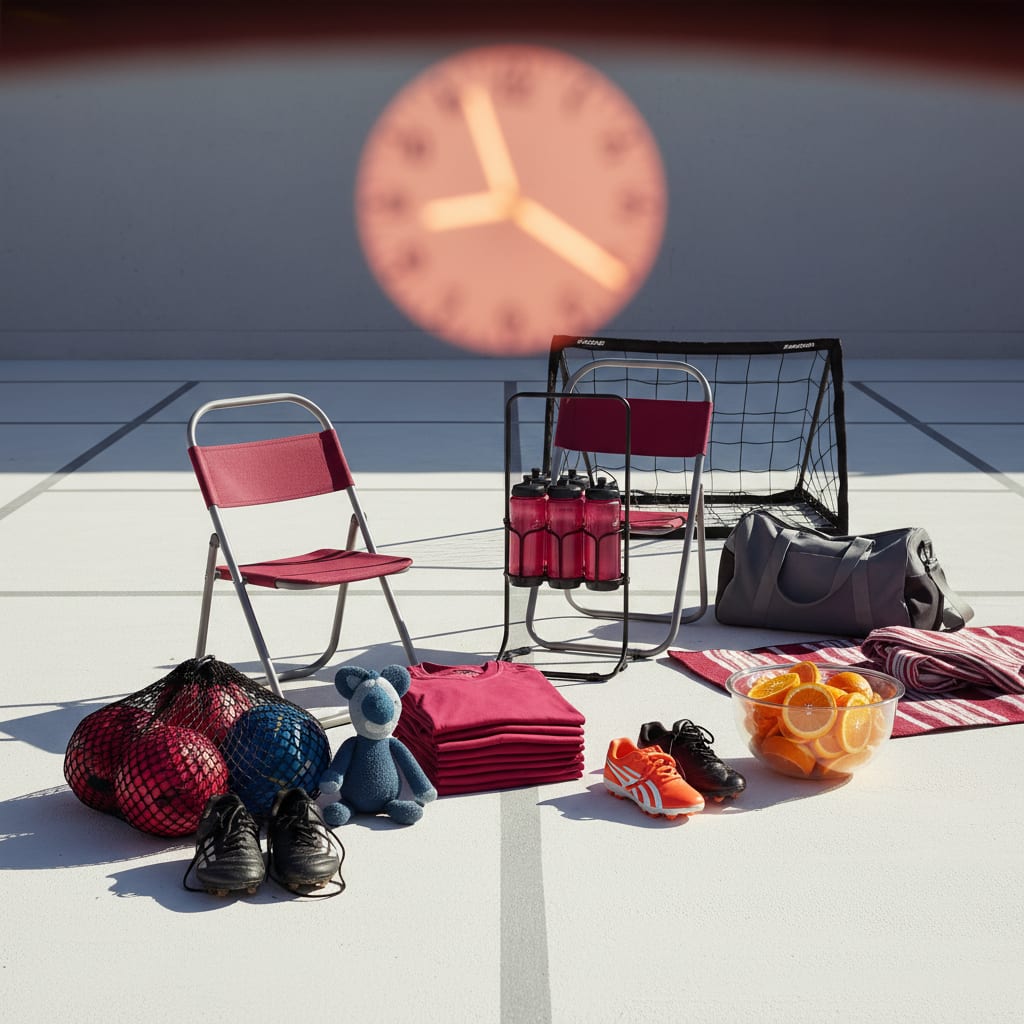
Tiring kids out does not reliably help them sleep, and for a baby, toddler or preschooler a big active day often makes the night worse. The activity itself is rarely the problem. The problem is what a sports day does around it: the nap skipped at the field, the twenty-minute doze in the car at 4:40, a bedtime that drifts later, and a loud, bright evening full of pizza and play-by-play. A child needs to be tired enough to sleep, and also calm enough. A tournament Saturday delivers plenty of the first and very little of the second.
Every sports family has said it. “Take her to the field, let her run the sideline all morning, she’ll sleep like a rock.” Then she’s awake at 9:15, wired, and back up at 5:10.
Why “tire them out” backfires
The belief treats sleep as a tank: empty it with enough running and the child falls asleep. Betteroo’s explainer on overtiredness describes the opposite: “the more exhausted a baby gets, the harder they fight sleep.” Its account of why is hormonal. When a young child stays awake past their limit, it says, “their body responds to the fatigue as stress, releasing cortisol and adrenaline,” which is where the giggly, hyper second wind at 8:30 comes from.
Helen Ball, who directs the Durham Infancy & Sleep Centre, frames it differently in a piece for The Conversation. In her account, what we call overtiredness is high sleep pressure plus something blocking it. She writes that when a child’s need to sleep is strong but “they are in a situation where they cannot relax – where there is noise, lights, or activity – we may label them as overtired.”
That second sentence could be a description of a tournament. I’m not going to referee between the two explanations from a folding chair, and on the night itself they point the same way. A big day raises the need to sleep, and the busy evening that follows it blocks the sleep from arriving.
What a big sports day actually does to the youngest
I break it into four separate problems, because the fix for each is different.
1. The nap happens somewhere else, or not at all. A baby or toddler who normally naps at 12:30 in a dark room is at game two at 12:30. Some sleep in the stroller or carrier. Plenty don’t, because the field is too interesting.
2. The rescue nap lands late. The kid who held out all day falls asleep in the car at 4:40 on the way home. In my house, twenty minutes at that end of the afternoon has been enough to wreck the whole evening, and what follows is the second wind.
3. The bedtime slides. Game three ran long, then there was the team dinner, so lights-out moves from 7:15 to 8:30. By then the child is much further past their usual limit than a normal evening would ever take them.
4. The evening is loud and bright. Siblings replaying the win, a restaurant, a hallway full of bags. On a normal night the house is winding down by 7. After a tournament it’s often at its liveliest.
None of that is the running. It’s the timing and the noise around the running. If you’ve read the tournament-weekend sleep plan, this is the same problem seen from the other side. That post covers keeping the weekend on its feet, and this one covers why the “at least she’ll sleep well tonight” part so often fails.
The preschooler in a first class
A four-year-old doing their first Saturday soccer class or first swim term is a slightly different case, because they are usually in the in-between stage with naps: needing one some days and not others.
Betteroo’s guide on when the nap is really finished says the most useful signal is mood at bedtime, not protest: “A child fighting bed is often overtired, not undertired.” It also warns that “a long late nap during the transition tends to create a difficult night.”
So a busy class day is often when you find out the nap wasn’t done. A preschooler who manages fine without one on a quiet Tuesday may not manage after a 9am class, a birthday party and a trip to the store. That’s not a verdict on the class. It means the rest of that day needs to be lighter.
What to do instead on a big-day night
- Put the activity early. Morning practice and a quiet afternoon is a far easier day to sleep after than an evening game.
- Let a moving nap count. A stroller or car nap at the normal time is a real nap on a game day. The late one at 4:40 is the one to avoid, so the drive home is where you spend your snacks, songs and window-down tactics.
- Move bedtime earlier, not later. This is the opposite of the instinct. Betteroo’s piece on why little ones resist sleep puts it plainly: “The fix is usually to catch sleep a little earlier.” On a big day, that means aiming earlier than your usual bedtime, not at the late one the day will push for. Pick the number on Friday, so nobody is negotiating it at 7pm in a parking lot.
- Make the landing calm. Ball’s advice for the meltdown is to “hug them, cuddle them, talk gently to them and calm them.” The debrief happens in the car and the replay of the winning goal waits until breakfast. The youngest’s room should be the quietest place in the house.
- Split the evening if you can. One adult takes the youngest straight into the bedtime routine while the other handles the unpacking and the older kids’ story of the day. The early-bedtime playbook has the version of this for ordinary practice nights.

A plan won’t shorten the bracket. What it gives you is the youngest’s own numbers, so on a tournament Saturday you know how far “a bit early” really is.
What to leave alone
- Don’t schedule extra activity to fix bad nights. If the nights are rough, a busier day is the one change most likely to make them rougher.
- Don’t skip the next day’s nap to “reset”. One off night is recoverable. Stacking a missed nap on top of it rarely helps.
- Don’t read one wired night as a trend. A tournament night tells you about a tournament day. Judge the youngest’s sleep on an ordinary week.
- Don’t keep the youngest home from the field over this. The sideline is part of family life in a sports house. Plan the day around their nap instead, and the sibling-in-tow plan covers what to bring.
If a child’s sleep stays difficult well beyond the busy days, or anything about it worries you, that’s a conversation for the pediatrician, not a reason to change the season.
FAQ: tiring kids out and sleep
Does running around all day make a toddler sleep better?
Not reliably. Plenty of activity is good for a toddler, but a big day usually comes with a missed or late nap and a busy evening, and those tend to make settling harder. What helps is keeping the nap and moving bedtime a little earlier.
Why is my child hyper after a big day instead of exhausted?
Overtired young children often get a burst of energy near bedtime. Betteroo puts it down to stress hormones, and Helen Ball of Durham University describes it as a child too wound up to let sleep in. Either way the fix is the same: an earlier bedtime and a quiet landing.
Should I put my child to bed earlier after a tournament?
Usually, yes. Aim a little earlier than the usual bedtime rather than later, keep the routine short and the house quiet, and decide the time before the day starts so it is not up for negotiation at the end of it.
My preschooler fell asleep in the car at 5pm. Should I wake them?
A late car nap often makes the night harder, so many families keep the drive home awake with snacks and conversation instead. If they do drop off, keep the nap short so bedtime stays close to normal.