How to Teach a Kid to Catch (Without the Flinch)
To teach a kid to catch, remove the reason to flinch before you teach anything else: a soft, slow, large ball tossed underhand from three or four feet away, aimed at the chest, with their hands already up and open. Flinching isn’t fear or a character flaw — it’s a reflex that fires when the brain can’t predict where the object is going. Take away the sting and the speed and it switches off within a session or two. Then, and only then, you add distance, then a smaller ball, then a glove. That order, or the flinch comes back.
Why kids close their eyes (it isn’t nerves)
Watch a five-year-old catch: hands up late, head turns, eyes shut, ball off the forearms. Parents read that as timidity. It’s mostly arithmetic. Catching requires predicting where a moving object will be in half a second, then getting two hands to that spot — a tracking-plus-timing problem that gets solved through repetitions, not encouragement. Until the prediction is reliable, the eyes closing is the body’s completely sensible default.
Which means the fix is never “keep your eyes open.” It’s making the ball so slow, soft and predictable that the prediction succeeds. Success turns the reflex off — not a parent saying “don’t be scared” in a slightly tight voice.
Start with a ball that doesn’t punish a miss
The single highest-leverage decision here is the object, not the technique. You want big, light, soft, and slow-flying, so a miss costs nothing and a catch is easy.
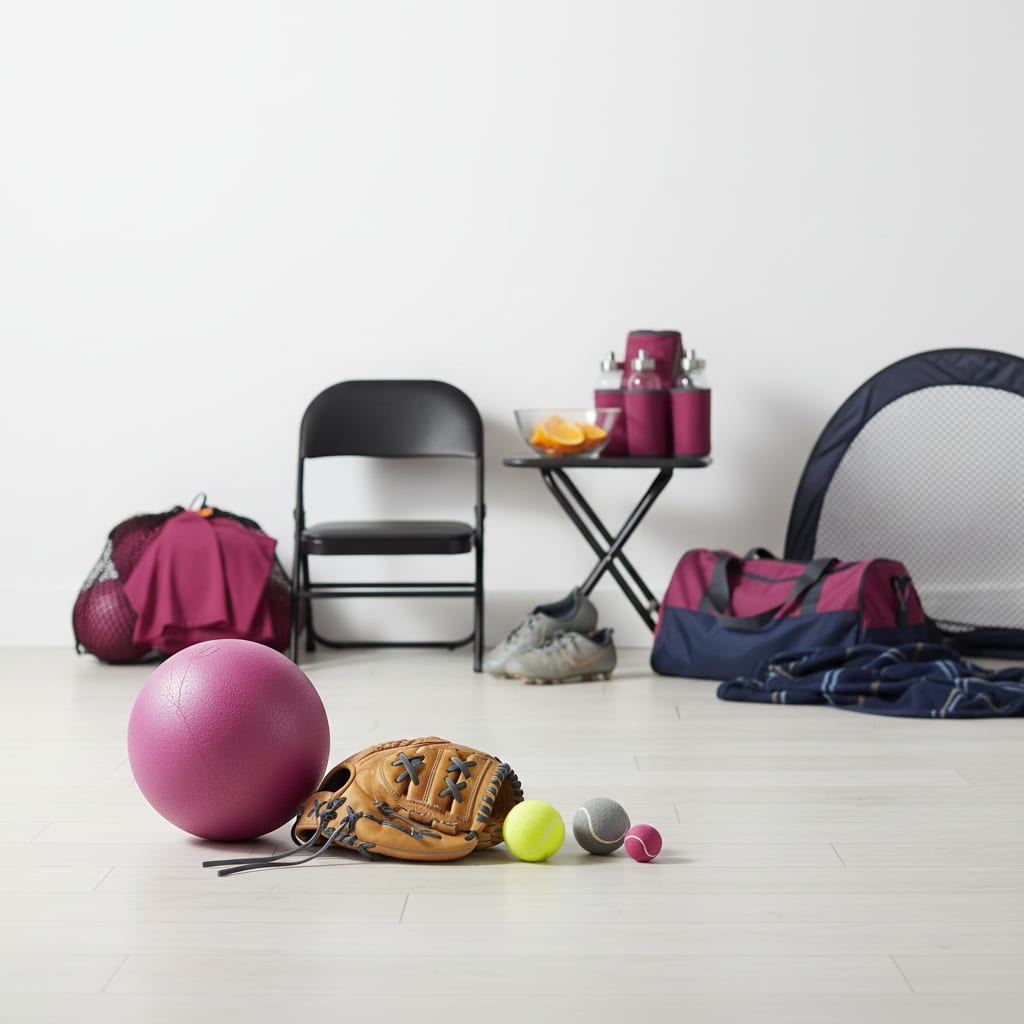
The one I hand every family starting this: an 8.5-inch coated high-density foam ball. It’s playground-ball sized, so small hands can trap it against the chest and count that as a catch, and it’s foam under a smooth coating, so a bobble off the fingertips is a non-event. Balloons and beach balls work for a day or two, but they float rather than fly and teach a timing that doesn’t transfer. Tennis balls and baseballs are for much later than most parents think. Skip weighted balls and anything marketed as a training aid entirely.
The progression, in the order that works
Six steps. Move up only when the current step is boring — that’s the signal it’s been learned.
- Roll it, don’t throw it. Sit on the floor a few feet apart, legs in a V, and roll the ball back and forth. This teaches tracking and hands-together with zero flight time.
- Bounce-pass it. From standing, bounce the ball once so it arrives at their chest. The bounce slows it and gives the brain an extra beat to solve the arc. Most kids catch here on day one.
- Underhand toss, arm’s length. Stand close enough that you could hand them the ball. Toss so it arrives chest-high, no arc worth mentioning. If it’s landing anywhere but their chest, that’s on you — a bad feed makes a kid look worse than they are.
- Add distance, one step at a time. Literally one step back per five clean catches. When a step produces two misses, come back in. The distance is not the goal; the clean rep is.
- Add height and arc. A gentle lob makes them move their hands from chest-catch to over-the-head, which is a different skill. Expect a temporary regression here. It’s normal and it passes fast.
- Shrink the ball. Only now. Foam, then a tennis ball, then whatever their sport uses. Every size-down costs a step or two of distance for a session — pay it, don’t skip it.
Two cues, and no more than two
Kids drown in verbal instruction while they’re still solving the timing problem. Give exactly these:
“Hands up, thumbs in.” For anything chest-high or above, thumbs together makes a basket. Below the waist, pinkies together instead. That’s the whole hand-position curriculum until they’re catching consistently.
“Watch it hit your hands.” Not “watch the ball” — kids think they are. Naming the endpoint keeps the eyes on the object through the last fraction of a second, which is exactly where they close.
Everything else waits. If you’re saying a third thing, the ball’s coming too fast.
Where the glove comes in
Later than the sports-store display implies. A glove makes catching harder at first: it’s a big stiff object on a small hand that has to be squeezed shut at exactly the right instant. Get bare-hands catching solid with a foam ball first, then introduce the glove with the same progression from step one — roll, bounce, close toss — because it genuinely is a new skill.
When you do buy, fit is the entire story, and a glove a kid can’t close is the most common reason a promising t-baller quits fielding. Our glove sizing chart from t-ball to 12U covers the measurement and the sizes that actually exist for small hands.
The ten-minute session, structured
Same shape as everything else we do in the driveway: short, daily-ish, ended early.
- Two minutes of the easiest step they can do. Warm-up is confidence, not muscles. Start below their level on purpose.
- Five minutes at the working step. Count out loud. Ten in a row, then a step back. Numbers are the entire motivation system for this age group.
- Two minutes of a game. “Catch it before it bounces twice,” “beat yesterday’s streak,” or my kids’ favorite: they announce an increasingly ridiculous nickname for the record-holder before each attempt.
- Stop while they want more. The habit mechanics that make this stick — cue, game, small win, done — are laid out in the ten-minute practice habit, and they matter more than the drill does.
Three sessions a week beats one long Saturday, for the same reasons as the backyard soccer drills. Nobody learns to catch in one afternoon; plenty of kids have learned to hate it in one.
The other half of a game of catch is how to teach a kid to throw a baseball.
What stalls a kid (all four are adult errors)
Throwing too hard “to challenge them.” Every miss at speed reinstalls the flinch you just spent a week removing.
Bad feeds. If the ball arrives at their knees, behind them, or over their head, you’ve made a catching drill into a chasing drill. Feed to the chest, every time, for months.
Coaching the miss. A kid who drops one and immediately hears why is learning that drops get discussed. Say the number, feed the next one, move on.
Skipping the sting problem. If the ball stings a little on a bad catch, the reflex is doing its job and no instruction gets you past it. Go back to foam.
FAQ: teaching a child to catch a ball
What age can a kid learn to catch?
Most kids can trap a rolled or bounced ball against the body somewhere in the toddler-to-preschool range, and start catching a tossed ball with their hands during the preschool-to-early-school years. The spread is wide and normal — plenty of kids who look behind at five are indistinguishable at seven.
Why does my child turn their head away from the ball?
It’s a protective reflex firing because the brain can’t yet predict the ball’s path. Slower, softer and closer removes the trigger. Repeated successful catches switch it off; instructions to stop doing it don’t.
What’s the best ball for teaching catching?
Big, light and soft — a foam playground ball is close to ideal because a fumble has no consequence. Move down in size only once catching is reliable, and expect a short dip in performance at each size change.
Should my kid use a glove to learn?
Not at first. Learn with two bare hands and a soft ball, then bring the glove in as a separate skill with its own short progression. A glove that’s too big to close is a common and fixable source of frustration.
How long does it take to teach a kid to catch?
For most kids, a couple of weeks of short sessions moves them from flinching to reliably catching a soft toss. Smaller balls, longer distances and moving catches take considerably longer, and they arrive in fits and starts rather than smoothly.
My child says they’re bad at catching. What do I say?
Agree that it’s hard, then make the very next rep easy enough to succeed — a bounce pass from three feet. Competence beats reassurance every time, and one clean catch is worth ten sentences about believing in themselves.